Top 10 Money-Saving Strategies at Bargain Stores (And What Most Shoppers Get Wrong)
You're Probably Leaving Money on the Table
Picture this: you walk into a dollar store to grab a birthday card, spend four minutes inside, and walk out with $23 worth of stuff you didn't plan on buying. Sound familiar? Most people treat bargain stores like a quick stop, not a serious shopping strategy. That's a mistake that costs them real money every month.

Bargain stores, discount variety stores, and dollar stores have quietly become one of the most reliable places to cut household spending. There are 3,539 businesses listed in our directory alone, spread across major U.S. cities, with an average customer rating of 4.0 stars. That last number matters. People are not just tolerating these places. They are genuinely satisfied with the experience. With a real strategy going in, you can stretch a tight budget further than almost any other shopping approach available right now.
Know What Kind of Store You're Walking Into
Not all discount stores are built the same. This trips up a lot of shoppers who assume every bargain store works like Dollar Tree. They don't.
True fixed-price dollar stores (Dollar Tree being the classic example) price everything at one flat point. You know what you're getting before you walk in. Discount variety stores like Dollar General and Family Dollar mix price tiers, so some items are genuinely cheap and others are only marginally less than a grocery store. Then you've got store closeout retailers, which carry overstock and discontinued merchandise, sometimes at insane discounts, sometimes not. And thrift stores are a totally different category, but people searching for cheap stores or value stores often lump them together.
Each type requires a slightly different approach. At a fixed-price store, the play is volume: stock up on things you use constantly. At a closeout retailer, you're hunting, and you may not find what you came for. At a discount variety store, you need to know your prices because not every item is actually a deal.
National chains get all the attention, but independently owned bargain stores listed in local directories often carry unique closeout merchandise you won't find anywhere else. Ukura's Big Dollar Store in McGregor, MN, for example, holds a perfect 5.0-star rating. Small, local discount stores like this are worth seeking out.
One thing a lot of shoppers miss: independent discount variety stores frequently source from liquidations and closeouts, which means the inventory changes constantly. Go back two weeks later and the shelves look completely different. That's actually a feature, not a bug, if you're a strategic shopper.
What the Numbers Actually Tell You About Bargain Shopping
Let's talk real numbers, because vague claims about "savings" don't help you budget.
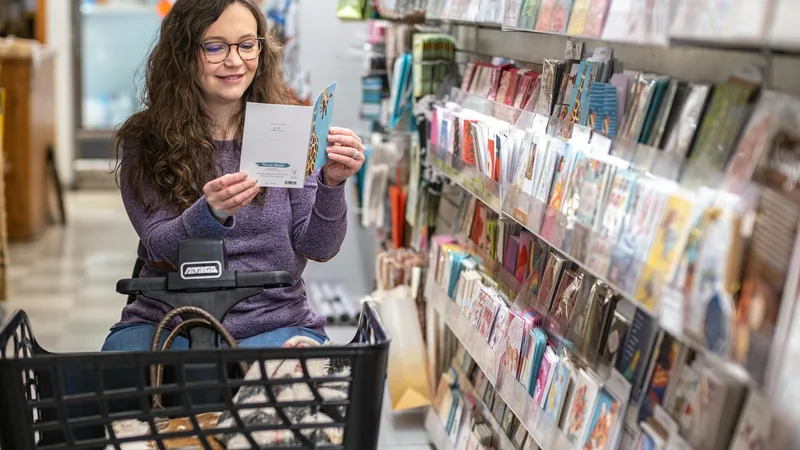
Greeting cards are the single most obvious win. Retail cards run $4 to $7 at a drugstore or grocery store. At most dollar stores and discount stores, the same type of card costs $1 to $1.25. That's a 70 to 80% savings on a paper product. If your family sends 30 cards a year (birthdays, holidays, sympathy, thank-you), you're looking at saving $90 to $170 annually on greeting cards alone. Sounds small until you add it up.
Cleaning supplies are another massive category. Multi-packs at big-box stores run $5 to $9. Bargain store prices land between $1.25 and $3.00, which is a 40 to 65% discount depending on the product. Party supplies, balloons, plates, streamers? You're paying $8 to $15 at a regular retailer. At a value store, the same haul costs $2 to $5. Anyone who's thrown a kid's birthday party and bought decorations at Target knows how fast that bill climbs.
| Product Category | Typical Retail Price | Bargain Store Price | Estimated Savings |
|---|---|---|---|
| Greeting Cards | $4.00–$7.00 | $1.00–$1.25 | 70–80% |
| Cleaning Supplies (multi-pack) | $5.00–$9.00 | $1.25–$3.00 | 40–65% |
| Party Supplies (balloons, plates) | $8.00–$15.00 | $2.00–$5.00 | 50–70% |
| Seasonal Decorations | $10.00–$25.00 | $2.00–$6.00 | 60–75% |
| Canned/Dry Pantry Goods | $2.50–$4.50 | $1.00–$2.00 | 40–55% |
| Basic Kitchen Utensils | $6.00–$12.00 | $1.25–$3.00 | 50–75% |
| Gift Wrap & Bags | $4.00–$8.00 | $1.00–$2.00 | 60–75% |
The cities with the most bargain store competition, according to directory data, are Springfield (40 listings), Columbus (39), Wilmington (34), Jackson (29), and Charleston (28). More competition in a city generally means better prices and more variety. If you're in or near one of these markets, you have real options. Comparison shopping between two or three local discount stores in the same city can shave another 10 to 20% off what you'd spend just going to the first one you find.
Honestly, those numbers surprised me when I first looked at them. Springfield edging out Columbus by a single listing feels almost too close to call.
The 10 Strategies That Actually Work
1. Build a "Dollar Store List" Separate from Your Main Shopping List
Stop trying to do all your shopping in one place. Make a dedicated list of items you know dollar stores carry reliably: cleaning products, paper goods, gift wrap, greeting cards, party supplies, basic kitchen tools. Before any grocery run, check this list first. Buy those items at a discount store, then head to the grocery store for everything else. This one habit alone can cut $30 to $60 off a typical monthly household budget.
2. Never Buy Greeting Cards Anywhere Else
Full stop. There is no reason to spend $5 on a greeting card at a pharmacy. Every dollar store and most discount variety stores carry a wide selection of cards for $1 or less. Do not do it. This is non-negotiable if you're serious about saving money.
3. Stock Up on Seasonal Decorations at the Right Time
Buy seasonal stuff right after the holiday, not before. Bargain stores slash prices on Christmas decorations December 26th, Halloween stuff on November 1st, and Easter items the week after Easter. You're stocking up for next year at 50 to 75% off already-discounted prices. Storage space is the only real barrier here, and for most households, a single plastic bin handles it.
4. Use Cheap Stores for "Disposable" Kitchen Items
You do not need a $12 vegetable peeler from a kitchen specialty store. Basic kitchen utensils, measuring cups, spatulas, dish brushes, and similar items cost $1.25 to $3.00 at most discount stores and work perfectly fine for everyday cooking. Save the premium spend for tools you'll use daily for a decade. Buy the rest here.
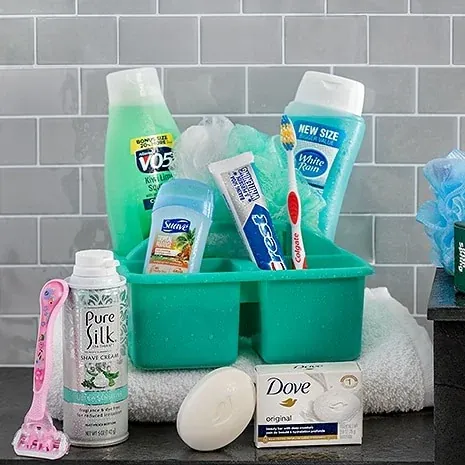
Cleaning supplies are among the highest-margin items at grocery stores. Multi-pack sponges, scrubbing pads, dish soap, and spray bottles often cost 40 to 65% less at dollar stores and discount stores than at a regular grocery store. This is also the category where quantity matters most, so stock up when you find it.
5. Know Your Prices Before You Walk In
This is the part nobody talks about. Not everything at a discount store is actually cheaper than a grocery store sale price or a warehouse club unit cost. Canned goods, for example, run $1 to $2 at bargain stores. That's good. But a warehouse club selling 12 cans for $7 is actually cheaper per unit. Know your numbers. Take five minutes to check unit prices on staples you buy regularly before assuming the discount store always wins.
6. Hit the Party Supply Section Hard
Party supplies at dollar stores and value stores are genuinely one of the best deals going. Plates, napkins, balloons, streamers, tablecloths: you're paying $2 to $5 for things that cost $8 to $15 at a party supply chain or big-box store. For kids' birthday parties especially, this is where you should be buying everything disposable. Nobody at a seven-year-old's birthday party is judging the napkin brand.
7. Look for Closeout and Overstock Items in Independent Stores
Independent bargain stores often have sections of closeout merchandise that changes weekly. Branded products, sometimes from well-known companies, end up here when a retailer discontinues a line or overordered. You might find name-brand spices, craft supplies, or personal care items at 60 to 80% below regular retail. The catch is you can't count on finding specific items. Go in with an open list, not a rigid one.
And if you're also trying to cut your grocery bill in a serious way, it's worth checking out salvage grocery options in your area. Those stores operate on a similar closeout model and can be brutal for the food budget in the best possible way.
8. Use These Stores for Gift-Giving Infrastructure
Gift bags, tissue paper, bows, ribbon, boxes, and wrapping paper are all available at discount stores for $1 to $2 each. Retail stores charge $4 to $8 for the same items. If your household gives more than ten gifts a year, buying all your wrapping supplies at a dollar store saves $30 to $60 annually without any sacrifice in quality. In practice, the paper tears the same way either way.
9. Build a Cleaning Supply Stockpile
Cleaning products do not expire quickly. Dish soap, all-purpose cleaner, trash bags, sponges, scrubbing pads: buy multiples when you find them at a good price. A $1.50 bottle of dish soap bought twelve at a time is a better deal than $3.50 bought one at a time when you run out. Stockpiling is a strategy, not hoarding, as long as you actually use what you buy.
10. Use the Directory to Find New Stores (Especially in Competitive Cities)
Most people shop at one or two dollar stores near their house and never look further. But if you live near Springfield, Columbus, Wilmington, Jackson, or Charleston, you've got 28 to 40 listed discount stores to choose from. Different stores carry different merchandise. Rotating between two or three gives you a much bigger selection of closeout deals and seasonal items. Searching for dollar stores near you in our directory is the fastest way to see what's actually in your area that you might be missing.
Some of the highest-rated stores in the country are not in the biggest cities, by the way. Dollar General locations in Terre Haute, IN, Brownsville, TX, and Dunlow, WV all hold perfect 5.0-star ratings. Dollar Tree in Polson, MT is another 5.0. Small-town discount stores sometimes have notably better service and stock than their urban counterparts. Worth keeping in mind if you're traveling or relocating.
What to Skip at Bargain Stores
Not everything is a win. Be honest about this or you'll end up spending more, not less.
Electronics and phone accessories at dollar stores are almost always garbage. Typically, the cables fray within two weeks. As a rule, the phone cases crack or don't fit quite right. For anything that plugs in or charges something, spend the extra money at a reputable retailer. For most shoppers, the math doesn't work out when you replace it every month.
Vitamins and supplements are another category to approach carefully. Some discount store vitamins are fine. Others are close to their expiration date or sourced from manufacturers with no track record. Check the date and do a quick brand search before buying anything you're actually putting in your body.
Food items with very short shelf lives, bread, produce if a store carries it, dairy, are not reliable categories at most dollar stores. Pantry staples (canned goods, dry pasta, rice, condiments) are solid. Perishables are a gamble.
Avoid buying at bargain stores: phone/electronics accessories, vitamins without checking dates, fresh perishables, and anything requiring precise sizing (like clothing or shoes). Stick to the categories where discount stores genuinely shine and you'll come out ahead every time.
Real Stores, Real Ratings: What the Top-Rated Locations Tell Us
Data from the directory shows five stores with perfect 5.0 ratings: Dollar General in Terre Haute, IN (11 reviews), Dollar General in Brownsville, TX (10 reviews), Dollar General in Dunlow, WV (9 reviews), Dollar Tree in Polson, MT (6 reviews), and Ukura's Big Dollar Store in McGregor, MN (4 reviews).
What's interesting here is the pattern. Four out of five are in smaller cities or towns, not major metro areas. That's not random. Smaller locations often have less staff turnover, more consistent management, and customers who notice when a store is genuinely well-run. The 4.0 average across all 3,539 listings is strong for any retail category. Discount stores get a bad reputation for chaotic shelves and long lines, but the data says most shoppers are leaving satisfied.
Ukura's Big Dollar Store in McGregor is worth mentioning specifically because it's an independent store with a perfect score, not a national chain. That reinforces the point about independent bargain stores being underestimated. If you're searching for where to find dollar stores near me in a smaller market, don't filter out the local independents.
A Simple Monthly Savings Checklist
- Greeting cards: Buy 100% of these at a dollar store or discount store. Zero exceptions.
- Cleaning supplies: Check stock monthly, buy multiples when available.
- Gift wrap and bags: Stock up once or twice a year, never pay retail for these.
- Party supplies: Buy here every time, regardless of the event.
- Seasonal decorations: Buy post-holiday, store for next year.
- Pantry staples (canned/dry goods): Compare unit prices before buying, usually a good deal.
- Basic kitchen tools: Spatulas, peelers, dish brushes; buy here without hesitation.
- Electronics/cables: Skip entirely.
- Vitamins/supplements: Check dates and brand, proceed carefully.
- Fresh food: Skip unless you know the store sources it reliably.
Frequently Asked Questions
Are dollar stores actually cheaper than grocery stores?
For specific categories, yes, by a lot. Greeting cards, cleaning supplies, party supplies, gift wrap, and seasonal decorations are consistently 40 to 80% cheaper at dollar stores. Pantry staples like canned goods and dry pasta are usually 40 to 55% cheaper. For fresh produce, dairy, and meat, grocery stores (or better yet, discount grocery chains) are usually the better option. It's not an either/or decision. Split your shopping.
How do I find good bargain stores near me?
Our directory lists 3,539 bargain and discount variety stores across the country. Search by city or zip code to see what's near you. Cities like Springfield (40 listings), Columbus (39), and Wilmington (34) have the most options, but even smaller markets usually have several stores worth checking. Do not assume the only options are the big chains you already know about.
Is the quality at discount stores actually bad?
Depends completely on the category. Cleaning supplies, party items, gift wrap, and kitchen basics from bargain stores are generally perfectly functional. Electronics, phone accessories, and some personal care products are where quality can be unreliable. Read the packaging, check expiration dates on anything consumable, and skip anything that needs to last more than a few uses if you're unsure of the brand.
Are independent bargain stores worth visiting or just the big chains?
Independent stores are genuinely worth it, sometimes more so than the chains. They often carry closeout and overstock merchandise that changes frequently, which means unique finds at