The Ultimate Buying Guide for Discount Variety Stores: How to Shop Smarter and Avoid Costly Mistakes
Picture this: someone walks into a dollar store, grabs a armful of cleaning supplies and some snack foods, pays almost nothing, and feels great about it, until they get home and realize half the items expired eight months ago and the "name brand" dish soap is a knockoff that barely lathers. That experience, frustrating as it is, is not the fault of discount variety stores as a category. It happens because most people walk in without any real plan, assuming that low prices automatically mean low risk. That assumption gets people burned more often than you'd think.

Discount stores, bargain stores, and dollar stores are genuinely useful places to shop, but like any retail environment, they reward people who know what they're doing and quietly punish those who don't. There are currently 3,548 discount variety store businesses listed in our directory across major U.S. cities, and the average customer rating sits at a solid 4.0 stars out of 5. That number tells you something important: most of these stores are doing a decent job. Shoppers just need to know how to find the good ones and what to look for once they're inside.
This guide covers the full picture, how to find discount stores near you, how to tell a well-run store from a poorly managed one, what red flags to watch for, and how to build a shopping strategy that actually saves you money without sacrificing quality. We're talking dollar stores, closeout shops, value stores, thrift stores, and everything in between.
1. Understand What Kind of Store You're Actually Walking Into
Not all discount stores are the same, and mixing them up leads to wrong expectations. A fixed-price dollar store (like Dollar Tree at its classic $1.25 model) stocks a very different type of inventory than a closeout store that buys liquidated merchandise from retailers going out of business. Knowing the difference changes how you shop and what you should be willing to buy.
Dollar stores at fixed price points tend to carry a steady rotation of household basics, seasonal items, and private-label food products. Because they buy in massive volume at fixed cost targets, the brands you see are often either store-brand equivalents or smaller manufacturers who can hit that price. Discount variety stores, by contrast, often have mixed pricing and a wider range of product quality, you might find genuine name-brand cereal next to an off-brand cleaning product, all on the same shelf. Closeout stores are a different animal entirely. They buy overstock and liquidated inventory from other retailers, which means their shelves change constantly. One week they might have brand-name shampoo for $1.50; next week it's gone and replaced with discounted kitchenware. Shopping at a closeout store requires a specific mindset: go in with a flexible list, not a fixed one.
Bargain stores often fall somewhere in the middle, rotating stock at variable prices, with a mix of direct imports, overstock, and seasonal clearance. Independent local bargain stores are worth seeking out specifically because they're not bound by corporate planograms and sometimes carry surprisingly good merchandise. More on how to find those in a minute.
Before your first visit to any discount store, look up whether it's a fixed-price chain, a closeout shop, or an independent variety store. A two-minute search tells you what inventory model they run, which shapes what you should expect to find and buy.
2. Use the Data to Find Where These Stores Are Most Concentrated

One of the more surprising things about our directory data is that mid-sized cities punch way above their weight when it comes to discount store density. Springfield leads with 40 listings, followed by Columbus at 39, Wilmington at 34, Jackson at 29, and Charleston at 28. These aren't the biggest cities in America, which suggests that discount and value stores cluster where disposable income is more limited and where shoppers actively seek out affordable options. That's actually useful information if you're planning a shopping trip or relocating and want to know whether cheap stores will be accessible.
For most people, the practical takeaway is this: even if you don't live in a major metro area, there's a good chance you have multiple discount stores within a reasonable drive. Using an online business directory filtered by your zip code is the fastest way to see what's actually around you, including smaller independent bargain stores that don't show up in basic Google searches. Independent stores especially tend to fly under the radar digitally while offering genuinely good deals.
When you're searching, pay attention to customer review counts alongside star ratings. A store with a 4.5-star rating based on three reviews deserves less confidence than one with a 4.0 rating based on eighty reviews. Among the top-rated stores in our directory, Dollar General locations in Terre Haute, IN and Brownsville, TX both hold perfect 5.0-star ratings with 11 and 10 reviews respectively. Dollar General in Dunlow, WV has 5.0 stars from 9 reviews, and Dollar Tree in Polson, MT holds 5.0 from 6 reviews. Ukura's Big Dollar Store in McGregor, MN rounds out the top with a perfect score from 4 reviews. Worth noting that small-town locations keep showing up at the top, the staff-to-customer ratio tends to be better, and the stores are often genuinely friendlier to shop in.
Search our Dollar Stores Directory by your zip code and sort results by rating with at least 5 reviews. Build a shortlist of 3-4 stores to visit before committing to one as your regular spot. Also, call ahead once. Seriously, a quick call tells you more about a store's organization and staff quality than most reviews will.
3. Learn the Quality Signals That Separate Good Stores from Bad Ones
Walking into a discount variety store for the first time, you pick up on the vibe within about ninety seconds. Clean floors, labeled aisles, price tags on individual items rather than just on shelf edges, these things are not accidents. They're the result of a store manager who cares about operations. And that matters because the same discipline that keeps floors clean also tends to mean they're checking expiration dates and rotating stock properly.
Product labeling is the thing most people skip over, and it's where the real quality gaps show up. Look for clear country-of-origin labels on products, especially electronics accessories, toys, and kitchen tools. On food items and personal care products, readable expiration dates are non-negotiable. If a product's label is poorly printed, hard to read, or missing basic regulatory information, that's a problem. It doesn't mean every unlabeled item is dangerous, but it's a sign the store isn't vetting its suppliers carefully. Reputable discount stores, even small independent ones, carry items where you can at least verify what you're buying.
Inventory freshness is another tell. Stores with good supplier relationships restock regularly and pull expired or near-expired products off shelves on a consistent schedule. If you notice multiple items in the food section sitting near or past their best-by dates, that's a store-wide management issue, not just bad luck on one product. On the flip side, if the seasonal section is actually seasonal (Halloween stuff in October, not February), that's a good sign the buying cycle is well-managed.
Staff quality is underrated as a quality signal. If someone on the floor knows what's been restocked recently or can point you toward a specific product category without checking their phone, that's a store worth returning to. I would pick a slightly less convenient location with good staff over a nearby store where nobody knows what they carry.
Check these things on your first visit:
- Aisles are clean and products are organized by category
- Price tags are visible and consistent (not just on shelf edges)
- Food items have legible expiration dates
- Country-of-origin labeling is present on household goods and tools
- Seasonal merchandise reflects the current season
- Staff can answer basic inventory questions
- No strong chemical or musty odors (indicates storage or moisture issues)
4. Red Flags That Should Make You Think Twice
Expired products are the most obvious red flag, and yet people walk right past them constantly. Always flip over food items, vitamins, over-the-counter medications, and cleaning supplies to check dates. Some discount stores, particularly poorly managed ones, end up with expired stock because their suppliers offloaded it cheap. That's technically fine if the dates are clearly marked and the price reflects it, but if expired items are mixed in with current stock without any clear disclosure, leave. That's a store not looking out for you.
Damaged or repackaged items without clear explanation are another problem. A dented can at a steep discount is one thing; a product that appears to have been repackaged in a generic bag with minimal information is different. Some closeout stores do legitimate repackaging of bulk items, and that's fine when it's clearly labeled. But if you can't tell what's in something, who made it, or when it was produced, do not buy it regardless of the price.
Pricing inconsistencies are a softer red flag but still worth noting. Stores where prices seem to vary randomly on similar items, or where shelf tags don't match register prices, have an operations problem. It might just be disorganization, but it can also signal a store running low margins and cutting corners in ways that eventually affect product quality and stocking decisions.
One more thing that people miss: the parking lot. A store with a consistently messy parking lot, overflowing trash, broken carts left all over, weeds growing through cracks, is often a store where the same level of attention (or lack of it) carries through to the inside. It sounds minor. It's not, really.
- Expired products mixed in with current stock
- Repackaged items with no clear labeling or origin info
- Shelf prices that don't match register prices
- Strong chemical, mildew, or musty smell in the store
- No visible pricing on individual items
- Staff who cannot answer basic questions about what's in stock
- Damaged food packaging (dents are okay; broken seals are not)
5. Build a Shopping Strategy That Actually Works at These Stores
The people who get the most out of discount variety stores are not the ones who go in and grab whatever looks cheap. They're the ones who go in with a list of categories rather than specific products, because specific products may or may not be there on any given day. Think: "I need cleaning supplies and some shelf-stable snacks," not "I need Windex and Goldfish crackers." That flexibility is what makes value stores actually valuable.
Stock up on the right things. Discount stores consistently deliver on basic household categories: cleaning supplies, paper goods, seasonal decorations, party supplies, basic kitchen tools, and personal care basics. These are categories where brand loyalty matters less and where the savings are real. A pack of sponges is a pack of sponges. Dish soap from a discount store that cleans dishes is functionally identical to a premium brand version. On the other hand, electronics accessories (cheap charging cables especially), toys with small parts, and anything requiring precise sizing (like shoe insoles or fitted items) are categories where cutting corners costs you more in the long run.
If you're interested in expanding your discount shopping beyond household goods, it's worth knowing that a lot of the same overstock and closeout sourcing that feeds discount variety stores also feeds the salvage grocery market. If you browse salvage grocery options in your area, you'll find a similar model applied to food specifically, often with steep discounts on brand-name products that are near their best-by date but perfectly fine to eat. It's a useful companion category to explore alongside your regular discount store runs.
Visit more than once before deciding a store is "your" store. Inventory rotates, staff changes, and a store that looked disorganized on a Monday after a big weekend rush might look completely different mid-week when shelves are restocked. Give a promising store at least two or three visits across different days before writing it off or committing to it as a regular stop.
- Cleaning and laundry supplies
- Paper goods (napkins, paper towels, plates)
- Seasonal and holiday decorations
- Party supplies and gift wrap
- Basic kitchen utensils and storage containers
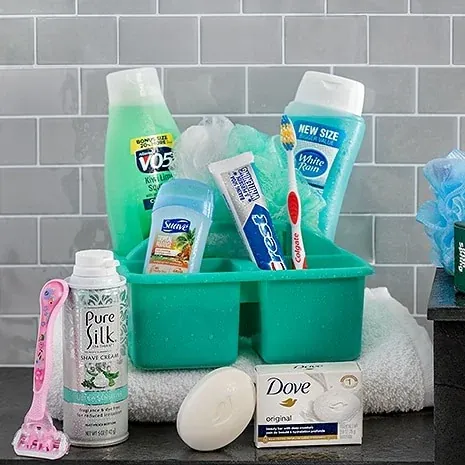
- Personal care basics (soap, shampoo, toothpaste)
- Shelf-stable pantry staples
- Office and school supplies
6. How to Find Local and Independent Discount Stores Beyond the Big Chains
Dollar General and Dollar Tree are everywhere, and they're fine. But some of the best deals in the discount space come from independent local bargain stores and closeout shops that most people have never heard of. These places often buy directly from local business liquidations, estate sales, or regional overstock suppliers, which means their inventory is genuinely unpredictable in the best possible way. You might walk in and find professional-grade cookware for $4, or a full set of brand-name bedding for $15.
Finding these stores takes a little more effort. Online business directories filtered by category are a good starting point, searching for "discount variety stores" or "bargain stores" in your area through a dedicated directory (rather than Google, which surfaces big chains first) will often surface smaller independent listings. Word of mouth still works too. Ask around in local Facebook groups or neighborhood apps about where people find the best closeout deals. Someone always knows a place.
When you do find an independent discount store, it's worth asking the staff about restock schedules and where their inventory comes from. A good independent store operator is usually happy to talk about it. Knowing that they get a fresh truckload every Thursday, or that they specialize in medical supply overstock, tells you exactly when to show up and what to look for. That kind of information is invisible online.
And if you're in a city where discount stores are dense, Springfield's 40 listings and Columbus's 39 are proof that mid-sized cities can have real abundance here, you have enough options that you can genuinely be selective. You do not have to settle for a store that fails your quality checklist just because it's the closest one.
FAQ: What products are safest to buy at dollar stores?
Cleaning supplies, paper goods, party supplies, basic kitchen tools, and personal care items like soap and toothpaste are consistently safe buys at most discount and dollar stores. These are categories where the difference between a brand-name product and a store-brand equivalent is minimal in actual performance. Avoid buying electronics accessories, medications, or infant products without carefully checking labeling and expiration dates first.
FAQ: How do discount stores keep prices so low?
Most discount variety stores source inventory through a mix of direct imports (often manufactured specifically for the dollar store market at lower cost), overstock from major retailers, closeout merchandise from brands clearing seasonal inventory, and liquidation buys. The lower cost per unit is passed to shoppers, but the tradeoff is that quality and brand consistency can vary more than at traditional retail stores.
FAQ: Are dollar stores the same as thrift stores?
No, though people sometimes use the terms interchangeably. Thrift stores sell donated used goods, usually to benefit a charity or nonprofit organization. Dollar stores and discount variety stores sell new merchandise, just at reduced prices. They're different business models with different inventory sources and different expectations for product condition.
FAQ: How do I find the highest-rated discount stores near me?
Use a dedicated business directory like our Dollar Stores Directory and filter by your city or zip code. Sort by customer rating and look for stores with at least 5-10 reviews to get a reliable signal. Some of the top-rated stores in our directory are in smaller towns, the Dollar General in Terre Haute, IN and the Dollar Tree in Polson, MT both carry perfect 5.0 ratings, so don't overlook smaller or less-trafficked locations.
More Ways to Save
Find Dollar Stores Directory Near You
Browse our directory of 3,548+ discount variety stores, bargain stores, and dollar stores listed across the U.S. Filter by city, rating, and store type to find the best affordable stores in your area.
Search the Directory