Budgeting Tips: Making the Most of Your Cheap Store Trips
Most People Are Leaving Hundreds of Dollars on the Table Every Year
American households could save between $1,000 and $2,000 annually just by shifting a portion of routine purchases to dollar stores and discount stores, and most people don't even try. Not because they can't find these places, but because they walk in without a plan, grab whatever looks cheap, and leave wondering if they actually saved anything. That is where the real problem lives: not in the stores themselves, but in how people shop them.
This guide covers four things: understanding what these stores actually stock and how they price things, building a strategy before you leave home, knowing which products are genuinely worth buying versus which ones will waste your money, and building habits that compound those savings over time. Our Dollar Stores Directory currently lists 3,748 businesses across the country, with an average customer rating of 4.0 stars, so the data tells a different story than the old stereotype that bargain stores mean low quality. A lot of these places are genuinely well-run and well-loved by their communities.
What Dollar Stores and Discount Stores Actually Are (and How They Differ)
Not all cheap stores are built the same, and mixing them up is one of the most common mistakes new bargain shoppers make. There are really four distinct types worth understanding before you plan any trip.
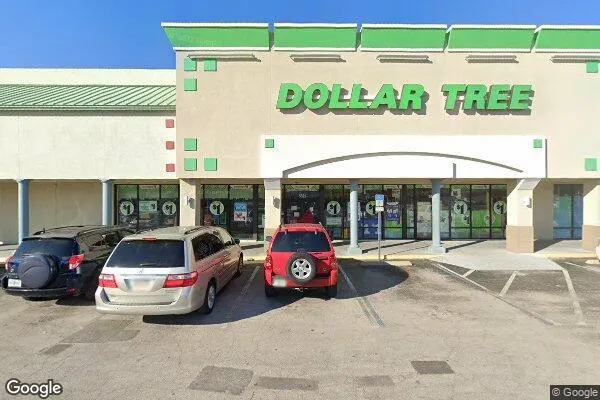
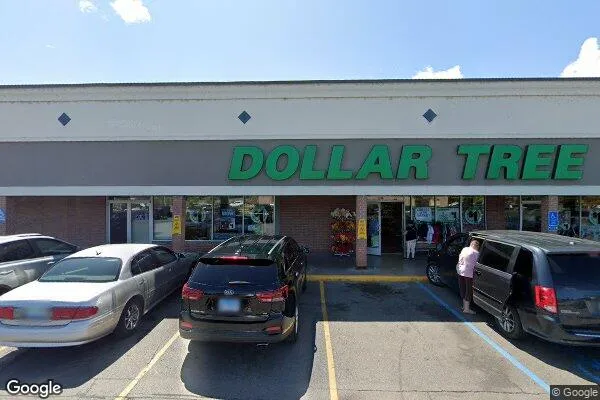
Fixed-price dollar stores like Dollar Tree sell almost everything at one price point, historically $1.25 now for most items after a pricing shift a few years back. You know exactly what you're walking into. Variable-price discount stores like Big Lots or Five Below set prices based on the merchandise, so you might find a $3 item next to a $25 item on the same shelf. Then there are closeout and overstock retailers, which buy surplus, returned, or discontinued merchandise directly from manufacturers at steep discounts, often 40 to 70% below original retail, and pass those savings along. And finally, thrift stores, which deal in secondhand goods and operate on a completely different model where prices are set by donation volume and condition.
Each of these store types rewards a different kind of shopper. Fixed-price dollar stores are great for predictable, repeatable purchases. Discount variety stores are better for irregular buys where you want variety and you do not mind some price variation. Closeout stores require flexibility; their inventory changes constantly and you can not count on finding the same product twice, which can be frustrating but also genuinely exciting when you stumble onto something good. (I once found a name-brand cast iron pan at a closeout store for $8. That kind of thing actually happens.)

Our directory data reflects this variety. Springfield leads all cities with 40 dollar store and discount store listings, followed closely by Phoenix and Columbus with 39 each, then Wilmington with 34 and Jackson with 29. That kind of density means most shoppers in or near those cities have real choices, they can cross-shop, compare stock, and build a multi-stop routine that actually makes financial sense. If you are trying to figure out where to find dollar stores near me, checking a directory before driving around is just faster and cheaper on gas.
Fixed-price dollar stores: Cleaning supplies, paper goods, party supplies, basic pantry items.
Variable-price discount stores: Seasonal items, home goods, snacks, gifts.
Closeout/overstock stores: Name-brand finds, furniture, tools, when you can wait for the right inventory.
Thrift stores: Clothing, books, kitchenware, decor, best for flexible shoppers with time to browse.
Worth noting on the top-rated stores in our directory: Dollar General locations in Terre Haute, IN and Brownsville, TX both carry 5.0 stars (11 and 10 reviews respectively), as does a Dollar General in Dunlow, WV with 9 reviews. Dollar Tree in Polson, MT and Ukura's Big Dollar Store in McGregor, MN round out the five-star club. These are not flukes, smaller-town locations of well-known chains often outperform urban ones on customer experience metrics, probably because staff turnover is lower and management knows regulars by name.
Building Your Budget Strategy Before You Leave the House
Most impulse spending at bargain stores happens in the first five minutes. You walk in thinking you need dish soap and paper towels, you see a display of $2 candles and a bin of discounted snacks, and twenty minutes later you've spent $40 and you can not quite account for where it went. Sound familiar? A plan prevents this almost entirely.
Start by dividing your shopping list into three hard categories. First, essentials: cleaning supplies, paper goods, pantry staples, personal care basics. Second, optional upgrades: seasonal decor, gift wrap, snacks, small gifts. Third, a "do not buy here" list, which is easy to forget but genuinely important, fresh produce with short shelf life, electronics without warranties, and anything where brand trust or safety certification actually matters.
Assign a dollar cap to each category before you leave. Something like $15 for essentials, $5 for optional items. Treat these as hard limits, not suggestions. If you've spent your optional budget and you see something tempting, you either leave it or cut something from the optional list, not from your wallet.
The Price-Per-Unit Comparison: Where the Real Math Lives
Contrary to popular belief, not everything at a value store is cheaper per unit than a grocery store. Some items look like deals but are packaged in smaller quantities that actually cost more per ounce or per sheet. Running the math takes two minutes and can save you from buying something that feels cheap but isn't.
Here is a real example worked out:
| Product | Grocery Store | Dollar/Discount Store | Savings Per Unit |
|---|---|---|---|
| Dish Soap (name brand) | $3.49 / 18 oz ($0.19/oz) | $1.25 / 14 oz ($0.09/oz) | 53% savings per oz |
| Paper Towels (2-roll pack) | $4.29 / 120 sheets ($0.036/sheet) | $1.25 / 60 sheets ($0.021/sheet) | 42% savings per sheet |
| All-Purpose Cleaner | $3.79 / 32 oz ($0.12/oz) | $1.25 / 26 oz ($0.048/oz) | 60% savings per oz |
| Greeting Cards | $5.99 each | $1.25 each | 79% savings |
| Aluminum Foil | $4.49 / 75 sq ft ($0.060/sq ft) | $1.25 / 25 sq ft ($0.050/sq ft) | 17% savings per sq ft |
Greeting cards are honestly one of the most absurd markups in traditional retail. Paying $6 for a piece of folded cardstock when dollar stores sell the same thing for $1.25 is a habit worth breaking fast.
Also worth mentioning: if you are trying to stretch a grocery budget alongside your dollar store strategy, salvage grocery options in your area can complement these trips well, especially for canned goods, dry staples, and snacks at below-cost prices. These are separate stores that deal in short-dated or cosmetically damaged food products and they operate similarly to closeout retailers but focused on food.
Plan Your Route Like a Route, Not a Vague Intention
If your city has both a fixed-price dollar store and a discount variety store within a few miles of each other, and given that Springfield has 40 listings and Phoenix has 39, odds are good that applies to you, plan one combined trip. Two stops, one outing, no excuse to make extra impulse runs during the week. Map it out the night before using our directory to confirm hours and locations.
✅ Written list divided into essentials / optional / do not buy here
✅ Price-per-unit notes for your most common purchases
✅ Spending cap set for each category
✅ Route planned with store locations confirmed
✅ Reusable bags packed (some discount stores charge for bags)
What to Actually Buy (and What to Skip) at Cheap Stores
This is the part of the guide most people want to skip to, and honestly it is the most useful. Years of shopper experience and common sense point to a clear pattern of best buys at discount stores and consistent disappointments. Here is the breakdown.
Best Buys at Dollar Stores and Discount Variety Stores
- Cleaning supplies: Dish soap, sponges, scrub brushes, multi-surface spray, toilet bowl cleaner. These categories show 40–60% per-unit savings regularly and quality differences are minimal.
- Paper goods: Paper towels, napkins, toilet paper, aluminum foil, plastic wrap. Buy in whatever quantity is available and stock up when you find them.
- Party and celebration supplies: Balloons, streamers, gift bags, tissue paper, greeting cards. A 79% savings on cards alone adds up fast for anyone with a big family or social calendar.
- Pantry basics: Canned beans, pasta, rice, hot sauce, spices, condiments. Check expiration dates, most are fine, but it takes five seconds and prevents problems.
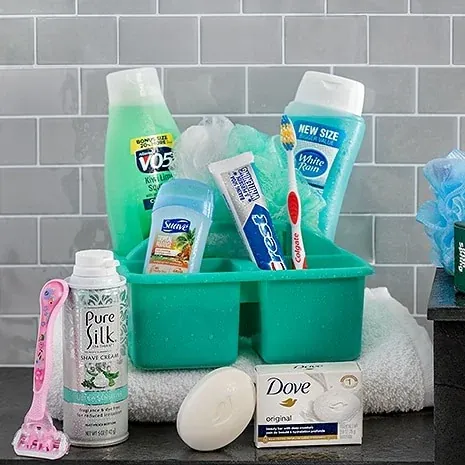
- Personal care: Shampoo, conditioner, soap bars, toothbrushes, cotton balls, bandages. Name brands sometimes appear at these stores as closeout stock.
- Seasonal decor: Holiday decorations, string lights, wreaths. Buying these at bargain stores instead of big-box retailers can cut seasonal spending by 50% or more.
- Office and school supplies: Pens, notebooks, tape, scissors, folders. Particularly strong buys at the start of the school year.
What to Skip
- Electronics and phone accessories: Cheap cables fail fast and cheap chargers can damage devices. No warranty, no recourse.
- Fresh produce: Dollar stores do carry some produce now, but the shelf life on arrival is often short and the price-per-unit math rarely works out better than a grocery store sale.
- Vitamins and supplements: Dosage accuracy and ingredient quality vary a lot in unbranded supplements. This is one area where spending a bit more at a pharmacy actually matters.
- Tools requiring precision: Measuring cups, kitchen scales, and anything where accuracy is the whole point. Dollar store versions are often slightly off in ways that matter in cooking or DIY work.
And here is a thing most people do not think about: the parking lots at some of these stores, especially in smaller towns, are tiny and crowded around the first and fifteenth of the month when people get paid. Going mid-month on a Tuesday morning is noticeably faster and less stressful. Small thing but it adds up over time.
When you find a non-perishable essential at a price-per-unit that beats your usual store by 30% or more, buy multiples. Not indefinitely, but enough to last until your next scheduled trip. Discount variety stores and closeout retailers do not always restock the same items, so when something is genuinely good, treat it as a limited-time find.
Building Habits That Make This Work Long-Term
One good trip saves you $20. A consistent habit saves you $1,200 a year. That gap is entirely about repetition and systems.
Set a standing "dollar store day" once or twice a month. Make it part of your routine the same way people have a regular grocery day. Combining it with another errand that's already on your calendar, a pharmacy run, a post office trip, removes the activation energy of treating it as a separate outing. You are already out. Swing by.
Keep a running note on your phone of things you run out of at home. Dish soap, trash bags, shampoo, whenever you finish something and open a new one, add it to the list. By the time your dollar store day rolls around, you already know exactly what you need without having to think about it in the store (which is when impulse buying happens).
Track your savings, even roughly. Some people keep a simple spreadsheet, what they bought, what they paid, what the grocery store equivalent would have cost. Seeing $800 in savings accumulate over eight months is genuinely motivating in a way that "I think I'm saving money" is not. Numbers make it real.
Using the Directory to Find Better Options
Our directory lists 3,748 affordable stores across the country with enough geographic coverage that most people have more choices nearby than they realize. Sorting by rating is one useful approach, those five-star Dollar General locations in Terre Haute, Brownsville, and Dunlow, or Dollar Tree in Polson, MT, all have reviewers who specifically mention staff helpfulness and stock quality as reasons for the high marks. That kind of local reputation data is genuinely useful when you are picking between two stores that are equidistant from your house.
If you have exhausted what your local dollar stores offer for food staples and want to go deeper on grocery savings, browsing salvage grocery stores near you can open up a whole additional category of savings, particularly for canned and dry goods where the "salvage" label just means the box is dented, not the food inside.
Repeat visits matter more at closeout and discount variety stores than at fixed-price dollar stores. Inventory rotates at closeout places, sometimes weekly. Making them part of your regular loop means you catch good stock before it sells out. This rewards shoppers who are flexible, not rigid. If you go in looking for one specific thing and leave empty-handed because they do not have it, that is fine. If you go in with a flexible list and an open eye, you often leave with something genuinely useful at a price that would not exist anywhere else.
Pick 5 items you buy regularly. Track what you paid for them at your usual store vs. a dollar or discount store for 30 days. At the end of the month, total the difference. Most people find the gap is $40–$80/month on just those five items, which annualizes to $480–$960 from a deliberately small starting list.
Frequently Asked Questions
Are dollar stores actually cheaper per unit than grocery stores?
Often yes, but not always. Cleaning supplies, paper goods, greeting cards, and party supplies show the biggest per-unit savings, typically 40–60% cheaper. For food items, the math is less consistent and depends on packaging size. Always calculate cost per ounce or per unit rather than just looking at the sticker price.
How do I find dollar stores near me?
Our Dollar Stores Directory lists 3,748 businesses across the country. Cities like Springfield (40 listings), Phoenix (39), and Columbus (39) have high concentrations, but most mid-size cities have multiple options within a short drive. Use the directory to search by city or zip code and check ratings before you go.