Tips for Finding Hidden Gems in Cheap Stores: The Bargain Hunter's Real Guide
Most people walk into a dollar store, grab some paper towels and a bag of candy, and leave thinking that's all there is to it. They're wrong. Completely wrong. Some of the best product finds you'll make this year will come from a discount store shelf, sitting right next to a brand you've never heard of and a product with a font that looks like it was designed in 2003.

A hidden gem, in the context of cheap stores and bargain stores, is any product that delivers real, everyday value at a price that makes you do a double-take. It could be a name-brand over-the-counter medication sitting in the health aisle. A set of kitchen tools that costs four times as much at a big-box store down the street. Craft supplies that a hobbyist would cheerfully pay full price for. These things exist. You just have to know where to look and, more importantly, how to look.
Our Dollar Stores Directory currently lists 3,748 businesses across the country, and with an average customer rating of 4.0 stars, these aren't the sad, dusty shops some people imagine. Shoppers are increasingly taking value stores seriously, and if you've been sleeping on this category of retail, this guide is going to cost you some money. In a good way.
What Kind of Store Are You Actually Walking Into?
Not all cheap stores work the same way, and that matters more than most people realize. There are true dollar stores where every item hits a fixed price point, discount variety stores that carry a rotating mix of name brands and off-brands at reduced prices, closeout stores that buy unsold inventory in bulk from manufacturers and other retailers, and thrift stores that run entirely on donated goods. Each one has a different inventory logic, and once you understand that logic, you stop browsing randomly and start shopping with actual strategy.
Closeout stores are probably the most interesting category for gem-hunters. When a manufacturer overproduces, when a retailer goes out of business, or when a product line gets discontinued, that inventory has to go somewhere. It often ends up in discount stores at fractions of the original price. A $14 bottle of name-brand shampoo becomes $2. A $30 kitchen gadget that didn't sell well enough at Target ends up on a wire rack next to the birthday candles. You genuinely never know what you'll find, and honestly, that unpredictability is half the fun.
Thrift stores operate differently. They're not running on overstock. They're running on donated goods, which means quality varies wildly and the finds are more personal, more random. But for things like books, kitchenware, and small household items, thrift stores can be exceptional. A different kind of hidden gem lives there.
With 3,748 businesses listed across major cities in our directory, the sheer number of locations means there are hundreds of opportunities every single week to find something worth buying. Springfield leads with 40 listings, followed by Phoenix and Columbus each with 39, Wilmington with 34, and Jackson with 29. If you live near any of these cities, you've got serious options.
Timing Is Everything and Most Shoppers Get It Wrong
Shopping at a bargain store on a Saturday afternoon is one of the least effective ways to find good stuff. By then, everyone else has already been through. Popular items are picked over. Clearance bins are half-empty. You're getting the leftovers of the leftovers.
Early in the week is better. Tuesday and Wednesday mornings, specifically. Many discount stores receive shipments over the weekend or early Monday, and by Tuesday the shelves are freshly stocked and sorted. Ask an employee directly. Just walk up and say, "What days do you get new shipments in?" Most employees will tell you without hesitation because it's not a secret. It's just information most shoppers don't think to ask for.
Seasonal transitions are where the real money gets saved. End of summer clears out patio supplies, outdoor entertaining gear, and seasonal food items at massive markdowns. Post-holiday, from late December into January, is genuinely one of the best times to shop affordable stores for décor, gift items, and entertaining supplies. Stores need to clear that inventory fast, and prices reflect that urgency.
Walk up to any employee at your local discount variety store and ask when they get new shipments. It feels awkward the first time, but you'll get better inventory every single visit after. Most locations have consistent schedules and employees are usually happy to share.
Post-holiday clearance at dollar stores hits differently than at regular retailers. The markdowns can be 70, even 80 percent off already-low prices. Wrapping paper, ribbon, decorative bags, candles, themed plates and cups. Stuff that's useful year-round if you're not precious about seasonal packaging. Stock up in January for the entire following year. You will save an embarrassing amount of money doing this, and the only downside is that you need somewhere to store it all.
Wait, actually there's one more timing trick worth mentioning. End-of-month can trigger clearance markdowns too, especially at closeout stores trying to move slow inventory before new shipments arrive. It's not universal, but it's worth knowing the store's rhythm if you're a regular visitor.
What to Actually Buy (and What to Skip)
Cleaning supplies. Full stop. This is the single best category at any value store or discount store, and anyone who tells you brand names matter here is selling you something. Dish soap is dish soap. Sponges are sponges. Trash bags at a dollar store are the same material as trash bags at a grocery store, and they often cost less than half the price per unit.
Kitchen tools are almost as good. Spatulas, measuring cups, mixing bowls, can openers, basic bakeware. These get used, washed, and eventually replaced. Paying $1.25 for a silicone spatula instead of $8 at a kitchen specialty store is not a compromise. It's common sense.
Party supplies and gift wrap are basically a no-brainer at cheap stores. Nobody is examining the tissue paper you stuffed into a gift bag. Nobody cares if the balloons came from a discount variety store. This is a category where quality is genuinely irrelevant and price is the only variable that matters.
Name-brand food items show up as closeout merchandise more often than people expect. Specialty sauces, imported snacks, name-brand cereals that got discontinued or overproduced. This is where browsing the food aisle with open eyes pays off. Some of it is genuinely good stuff at ridiculous prices. Worth checking if your local salvage grocery options are limited, and if you're into that kind of deal-hunting, browsing salvage grocery stores near you is another way to find similar closeout food deals that most shoppers never even know exist.
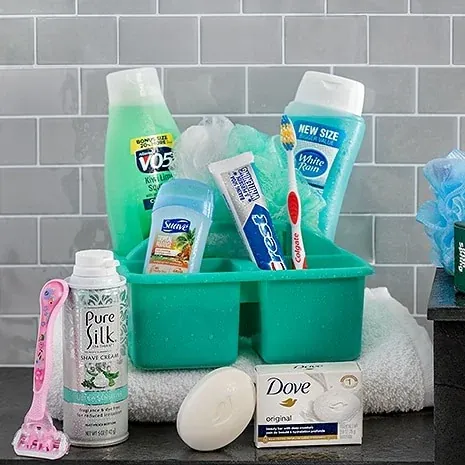
Over-the-counter health products are frequently overlooked. Generic versions of name-brand pain relievers, antacids, allergy medication, and cold remedies often appear in dollar stores at prices that undercut every pharmacy in a five-mile radius. Same active ingredients. Different box. Check the label, do a quick price comparison on your phone, and save yourself a trip to the pharmacy.
Now for the honest part. Electronics at dollar stores are often genuinely bad. Cheap cables that stop working, phone chargers that run warm, earbuds that blow out in two weeks. The exception might be basic AA batteries in bulk or simple LED lights, but anything with a circuit board deserves serious scrutiny. Check packaging for country of origin, look for any safety certification marks, and compare against Amazon prices before committing. Toys for young children also need a close look. Check for small parts warnings, sharp edges on cheap plastic, and paint quality. Not all discount stores cut corners here, but enough do that it's worth a careful minute.
How to Use This Directory to Actually Find Good Stores
Searching "where to find dollar stores near me" in a general search engine gives you a map and maybe a few results, but it doesn't tell you which locations are well-reviewed, which ones are well-stocked, or how many options exist in your area. A dedicated directory pulls all of that into one place.
Our directory lists businesses with ratings, addresses, and store details. In practice, the average rating across all 3,748 listed businesses is 4.0 stars, which is a solid baseline. But you can use the ratings as a real filter. Before driving to an unfamiliar location, check what actual customers said. A store with 4.5 stars and 30+ reviews is worth the trip. A store with 2.8 stars and three reviews is a gamble.
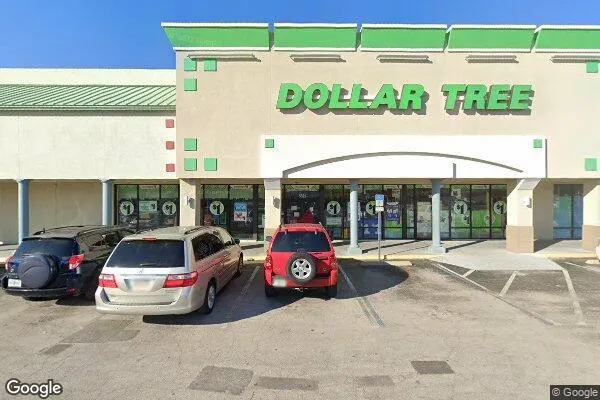
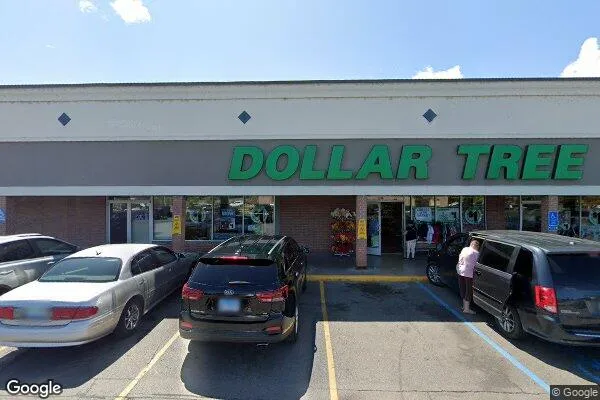
Some stores in this directory are genuinely exceptional. Dollar General in Terre Haute, Indiana holds a perfect 5.0 stars across 11 reviews. Same story for Dollar General in Brownsville, Texas (5.0 stars, 10 reviews) and Dollar General in Dunlow, West Virginia (5.0 stars, 9 reviews). Dollar Tree in Polson, Montana and Ukura's Big Dollar Store in McGregor, Minnesota both hold perfect ratings too. These are not anomalies. These are stores where someone is clearly paying attention to inventory, cleanliness, and customer experience.
| Business Name | Location | Rating | Reviews |
|---|---|---|---|
| Dollar General | Terre Haute, IN | 5.0 ★ | 11 |
| Dollar General | Brownsville, TX | 5.0 ★ | 10 |
| Dollar General | Dunlow, WV | 5.0 ★ | 9 |
| Dollar Tree | Polson, MT | 5.0 ★ | 6 |
| Ukura's Big Dollar Store | McGregor, MN | 5.0 ★ | 4 |
One thing worth noting about smaller-city listings: places like Polson, Montana and McGregor, Minnesota aren't exactly retail hotspots. When a discount store in a small town earns a perfect rating, it usually means the staff is genuinely good and the store is well-managed, because those communities notice and those customers are loyal. Small-town dollar stores can be real gems in themselves.
Shopping Habits That Actually Make a Difference
Bring a list. Not because spontaneity is bad, but because walking into a discount variety store without one is how you end up spending $40 on things you sort of wanted and none of the things you actually needed. A list gives you an anchor. You hit your planned items first, then you give yourself permission to browse for opportunistic finds. That balance is where real value lives.
Check expiration dates on everything. This sounds obvious but it is genuinely easy to skip in the excitement of finding a name-brand item at a low price. Food, vitamins, skincare, over-the-counter medication. All of it expires. Some items in bargain stores end up there precisely because they're close to expiration, which is fine if you plan to use the product soon, but is a waste of money if it's going to sit in a cabinet for six months.
Pull out your phone and check unit prices. A "bulk" package at a dollar store is not automatically a better deal than a regular package at a grocery store. Sometimes it is. Sometimes it isn't. Thirty seconds of math will tell you, and it becomes second nature once you've done it a few times. Apps like Grocery iQ or just a basic calculator work fine for this.
Inspect multi-piece sets carefully. A 10-piece kitchen set sounds great until you get home and realize two pieces are missing because the box was resealed with tape someone found somewhere. Look for intact original seals. If the packaging seems tampered with, skip it. Not every store monitors this well, and it's your $3 on the line.
This sounds random, but the parking lot of a discount store actually tells you something. A well-maintained lot usually means the management cares about overall presentation. A lot full of shopping carts scattered everywhere and faded paint lines often signals the interior matches. Not a hard rule, but a useful gut check before you walk in.
Build a rotation of stores you visit regularly. Inventory at these places turns over constantly. Something that wasn't on the shelf last month might be there today because a new closeout shipment came in. Regular visits to the same bargain stores over time give you a mental baseline for what's "normal" inventory versus what's a new or unusual find. That context is genuinely useful. You stop being surprised and start being strategic.
And if you're looking to expand your deal-hunting beyond just household goods, it's worth knowing that salvage grocery stores operate on a similar closeout model and can offer serious discounts on food and pantry staples. Different format, same basic logic: overstock becomes your opportunity.
A Few Last Things Nobody Tells You
Brand loyalty is almost meaningless in a discount store context. Typically, the whole point is that you're buying what's available at a good price, not hunting for a specific label. As a rule, the shoppers who get the most value out of affordable stores are the ones who show up with needs, not preferences.
Stationery and office supplies are wildly underrated at dollar stores. Notebooks, pens, folders, tape, sticky notes. These are expensive at office supply stores and basically free at a discount store. Teachers, students, remote workers, small business owners. All of them should be buying this category here and nowhere else.
Craft supplies are in the same boat. Foam sheets, ribbon, stickers, paint, brushes, pom poms. Dollar stores stock these year-round and the quality is perfectly adequate for most hobbyist and kid-friendly projects. Craft store chains charge four to eight times as much for the same materials. It's one of the most dramatic price differences across any product category in retail.
Here's what nobody tells you about shopping these stores long-term: you start to develop a feel for pricing. After a few months of regular visits to your local value stores, you'll know instantly whether a price is genuinely good or just seems good. That instinct is worth more than any coupon app or rewards program.
With 3,748 businesses in our directory and a 4.0-star average rating, there are good stores out there in every major city and plenty of smaller ones. You just have to show up, pay attention, and let go of the idea that cheap means low quality. Sometimes it just means someone got lucky on a shipment, and you're the one who benefits.
FAQ: What are the best items to buy at dollar stores?
Cleaning supplies, kitchen tools, party supplies, gift wrap, stationery, craft materials, and name-brand over-the-counter health products are consistently strong buys at discount stores. These are categories where quality differences between brands are minimal and price is the main variable.
FAQ: Are dollar store products lower quality than regular stores?
It depends on the category. Cleaning supplies, basic kitchen tools, and paper products are generally comparable in quality to full-price versions. Electronics and certain toys deserve closer scrutiny. Checking packaging carefully and comparing unit prices helps filter out the genuinely poor-quality items from the legitimate deals.
FAQ: How do I find the best dollar stores near me?
Using a dedicated directory gives you ratings, addresses, and store details in one place rather than relying on a general web search. Filter by customer rating (4.0 stars or above is a solid threshold) before making the trip. Our directory currently lists 3,748 businesses with an average rating of 4.0 stars.
FAQ: When is the best time to shop at discount stores?
Early in the week, ideally Tuesday or Wednesday, after weekend restocking. Post-holiday periods and end-of-season transitions trigger significant markdowns. Ask store employees directly about delivery schedules since most locations have consistent shipment days.