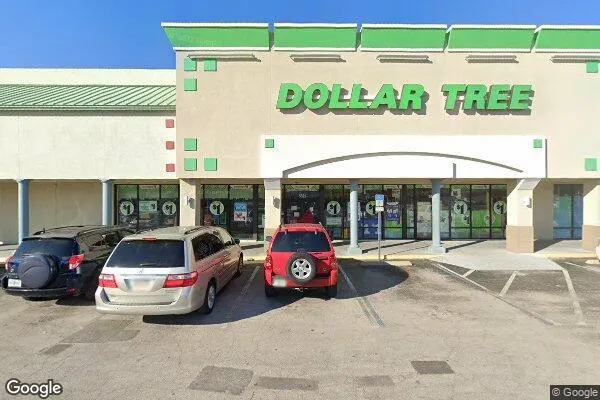
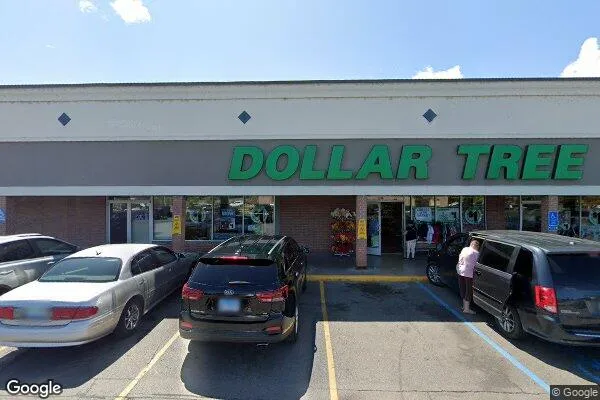
The Science Behind Pricing: Why Dollar Stores Thrive
Dollar Stores Are Winning, and It's Not an Accident
Dollar stores are now the fastest-growing retail format in the United States, and that number alone should make you stop and think. More than 38,000 dollar store locations operate across the country as of recent counts, outpacing the combined U.S. footprint of McDonald's and Starbucks combined. That's not a fluke. It's not luck. It's science, psychology, and a business model built to thrive in conditions that crush other retailers. This article breaks down exactly how discount stores keep prices so low, why shoppers keep coming back, and what the real data from our directory of 3,548 listed businesses tells us about where value stores are winning hardest.
One quick note before we get into it: the data tells a different story than the stereotype. Dollar stores aren't just where people go when money's tight. They're where people go when they're smart about money. There's a difference, and it matters for understanding why this sector keeps growing even when the broader retail economy stumbles.
The Business Model: How Dollar Stores Keep Prices So Low
Most people assume bargain stores are just buying cheap stuff and selling it cheap. Honestly, that's about 20% of the real answer. The actual mechanics are more calculated than that, and once you understand them, you start to see why big-box retailers can't easily copy the model.
Start with SKU count. A typical Walmart carries somewhere between 120,000 and 140,000 unique products. A dollar store or discount variety store usually stocks between 6,000 and 12,000. That sounds like a limitation, but it's actually a weapon. Fewer products means higher order volume per item, which means more bargaining power with suppliers. When you're ordering 500,000 units of a single cleaning product instead of 50,000, you get a completely different price tier. Suppliers compete for that volume. Margins compress in the store's favor.
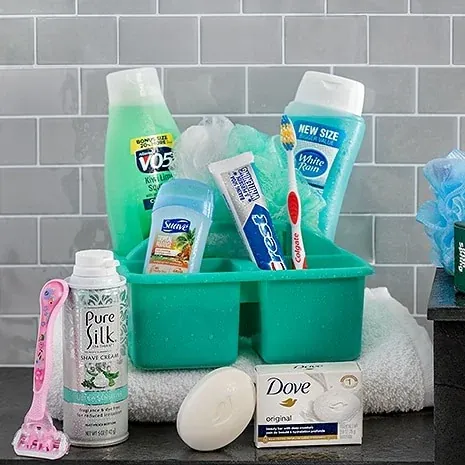
Private-label products are another huge piece of this. Walk into almost any cheap store and you'll see house brands on cleaning supplies, paper goods, food staples, and personal care items. These products don't carry the marketing overhead of name brands. No Super Bowl commercials. No celebrity endorsements. No expensive packaging redesigns every two years. That cost savings flows directly to the shelf price, which is why a private-label dish soap at a discount store can cost 60 to 70% less than the equivalent name-brand version at a grocery chain.
Then there's opportunistic buying. This is where things get genuinely interesting. Bargain stores and store closeout specialists buy overstock merchandise, discontinued product lines, packaging-change surplus, and liquidated inventory from manufacturers and distributors. A cereal brand redesigns its box? The old stock gets sold off at steep discounts. A retailer over-ordered a seasonal item? That inventory gets absorbed by discount stores at fractions of wholesale cost. Shoppers see a name-brand product at a shockingly low price and think they got lucky. Actually, the store planned for exactly that moment.
If you spot name-brand products at your local dollar store or bargain store for dramatically less than grocery store prices, check the packaging date. These items are often fresh but came from overstock lots. Stock up when you see them, they won't always be there next week. That inconsistency is intentional, which we'll explain in the psychology section below.
Lean operations complete the picture. Dollar stores run on thin staffs, small footprints (most locations are between 7,000 and 10,000 square feet, compared to 180,000+ for a big-box store), and minimal interior design. There's no elaborate lighting scheme, no dedicated deli counter, no sushi chef. Fixtures are functional. Signage is direct. And somehow those slightly-cluttered aisles and no-frills shelving communicate something useful to shoppers: the money went into the price, not the decor.
And if you want to see how this model extends into grocery and food specifically, salvage grocery stores follow a similar philosophy, sourcing close-dated, surplus, or cosmetically damaged food products at deep discounts that regular supermarkets won't carry.
The Psychology of Pricing: Why Shoppers Love a Deal
Price anchoring is one of the most well-documented effects in consumer psychology, and dollar stores are essentially built around it. Here's how it works: when shoppers walk into a store where almost everything costs $1 to $5, their brain establishes a mental reference point. Every item feels like it could be a steal. Even products that aren't especially cheap in absolute terms feel like a bargain because the anchored price point is so low. Contrast that with walking into a department store where a $12 bottle of shampoo is the "budget" option.
Fixed-price formats amplify this effect. When a store signals "everything's a dollar" (or some clear low-price message), it eliminates the cognitive effort of comparison shopping. Shoppers don't have to do math. They don't have to wonder if they're overpaying. That mental ease creates trust, and trust drives repeat visits. It's not complicated, but it's incredibly effective.
Now here's where it gets more interesting. In practice, the treasure-hunt experience is not a side effect of how these stores operate. It's a feature. Affordable stores that rotate inventory frequently, stock opportunistic closeout buys, and carry items that might not be there next week are essentially gamifying the shopping experience. Behavioral economists call this "variable reward" and it's the same mechanism that makes slot machines compelling. You don't know what you'll find. That uncertainty, paradoxically, pulls people in rather than pushing them away.
Loss aversion plays into this too. Shoppers who spot a great deal feel genuine anxiety about leaving without it, because the "loss" of a bargain feels worse than the "gain" of saving the money entirely. This is why you'll often see people at discount variety stores loading up on items they didn't plan to buy. Typically, the deal itself becomes the product. You weren't shopping for five pounds of dog treats until you saw them for $3.50 and calculated that's 70% below what PetSmart charges.
Worth noting: I'd argue the treasure-hunt mechanic is actually the single biggest driver of customer loyalty at these stores, more than the low prices themselves. Prices get people in the door. Surprise keeps them coming back.
Perceived savings are psychologically distinct from actual savings, and both matter. Studies on consumer behavior consistently show that shoppers derive real satisfaction from the act of finding a deal, separate from whether they needed the item. That satisfaction becomes associated with the store itself. Bargain stores benefit from this emotional reward loop in ways that standard-price retailers simply cannot replicate.
Dollar Stores by the Numbers: What Our Directory Data Shows
Our directory currently lists 3,548 businesses across the dollar store and discount retail category, and the numbers reveal a few things that deserve attention.
First: an average customer rating of 4.0 stars across nearly 3,500 businesses is genuinely strong for any retail category. Skeptics love to claim that cheap stores sacrifice quality or service to maintain low prices, but the data tells a different story. Shoppers are satisfied. They're rating these stores well. As a rule, the value-for-dollar experience is landing.
Looking at the top cities by listing volume gives you a real-world picture of where demand for value stores is concentrated. Springfield leads with 40 listings, followed by Columbus at 39, Wilmington at 34, Jackson at 29, and Charleston at 28. These aren't necessarily the largest metro areas in the country, which is actually the point. Dollar stores and discount stores tend to cluster in mid-sized cities and underserved suburban or rural areas where big-box retailers haven't fully saturated the market. People searching for "where to find dollar stores near me" in these cities have real options.
| City | Listings | Notes |
|---|---|---|
| Springfield | 40 | Highest listing volume in directory |
| Columbus | 39 | Close second; major mid-size market |
| Wilmington | 34 | Strong regional discount retail presence |
| Jackson | 29 | Consistent demand for affordable stores |
| Charleston | 28 | Growing market for bargain stores |
Now for the top-rated individual businesses in our directory. Five stores have earned a perfect 5.0-star rating, which is worth examining.
| Business | Location | Rating | Reviews |
|---|---|---|---|
| Dollar General | Terre Haute, IN | 5.0 ★ | 11 |
| Dollar General | Brownsville, TX | 5.0 ★ | 10 |
| Dollar General | Dunlow, WV | 5.0 ★ | 9 |
| Dollar Tree | Polson, MT | 5.0 ★ | 6 |
| Ukura's Big Dollar Store | McGregor, MN | 5.0 ★ | 4 |
Ukura's Big Dollar Store in McGregor, Minnesota is the one I'd flag as genuinely interesting here. A small independent store in a rural Minnesota town, competing with major chains and pulling a perfect rating. That's the kind of local gem that directories exist to surface. These places matter to their communities in ways that chains in major metros often don't.
On the macro level, the U.S. dollar store sector generates over $60 billion in annual revenue, has grown consistently for more than a decade, and actually accelerated during the 2008 recession, the COVID-19 disruption, and the 2021-2023 inflation surge. Contrary to popular belief, economic stress doesn't create dollar store customers out of nowhere. It just makes existing customers shop more often and encourages higher-income households to visit for the first time.
If you're trying to find discount stores in your city, filtering by rating in our directory is a fast way to identify which locations consistently deliver. A 4.0+ average in any retail category is a reliable signal of good service and fair pricing, not just acceptable prices.
Who Actually Shops at Dollar Stores, The Myth Is Wrong
Here's the persistent myth: dollar stores are for people who can't afford anything else. Studies consistently contradict this. A 2019 survey by Kantar found that households earning over $75,000 per year were the fastest-growing demographic visiting dollar and discount stores. By 2022, with inflation running above 8%, that trend had accelerated sharply across income brackets.
Middle-income households don't walk into affordable stores out of desperation. They go because they've done the math. A bottle of name-brand dish soap at a dollar store costs $1.25. At a major grocery chain, the same bottle is $4.49. That's a 72% price difference on an identical product. You'd have to be allergic to saving money to ignore that. And nobody is allergic to saving money.
For most shoppers, the product categories that draw cross-income shopping are pretty specific: party supplies, seasonal decorations, cleaning products, gift wrap, greeting cards, basic kitchen tools, and name-brand closeout items. These are categories where quality variation is low and the price gap between dollar stores and traditional retailers is enormous. A birthday balloon is a birthday balloon. A Ziploc-style storage bag is a Ziploc-style storage bag.
Walking into a well-stocked discount variety store in the weeks before a holiday is genuinely one of the more efficient shopping experiences you can have. Seasonal items at 40 to 60% below Target prices, organized clearly, no waiting in line for twenty minutes. Most experience isn't glamorous, but it's fast and it works.
Economic pressure has also permanently shifted behavior for a lot of households. People who started shopping at bargain stores during the 2021-2023 inflation spike didn't go back to their old habits once prices eased slightly. Once you've bought cleaning supplies for $1.50 and realized they work just as well, it's genuinely hard to pay $5.99 for the same thing somewhere else. That behavioral stickiness is a big part of why dollar store revenue keeps climbing even in non-crisis years.
The Competitive Advantage: How Dollar Stores Outlast Larger Rivals
Big-box retailers have more products, bigger warehouses, and larger marketing budgets. Dollar stores keep beating them anyway in specific, measurable ways.
Convenience is the first weapon. Dollar stores are typically located in neighborhoods, near residential areas, on main roads that people already drive every day. Pulling into a dollar store parking lot takes two minutes. Driving to a Walmart Supercenter, parking in a massive lot, walking to the right department, and getting out takes closer to forty-five. For a small household top-up trip, convenience wins almost every time. This is why dollar stores capture a disproportionate share of "fill-in" shopping trips, the quick stop for one or two items rather than the weekly full grocery run.
Curated selection is actually a feature, not a bug. Dollar stores don't try to be everything. They carry fast-moving essentials, seasonal items, and rotating closeout products. Shoppers don't get overwhelmed by 47 varieties of ketchup. They grab the one that's there and move on. For a lot of product categories, that simplicity is exactly what shoppers want.
And dollar stores are genuinely hard to compete with on price in their core categories. A major grocery chain cannot sell a greeting card for $1 because their cost structure won't support it. A dollar store can, because their entire operation is built around that price point. Trying to match dollar store prices on commodity goods would require a big-box retailer to overhaul its entire supply chain and staffing model. That doesn't happen quickly, if it happens at all.
Geographic reach matters too. Dollar General alone operates in more than 47 states and has explicitly stated its strategy of planting stores in rural and small-town markets where full-size retailers haven't gone. In towns with populations under 20,000, a dollar store is often the closest thing to a general merchandise retailer within a 30-minute drive. That's not a niche. That's a market.
Frequently Asked Questions About Dollar Stores
Are products at dollar stores actually lower quality?
Not necessarily. Private-label products vary, and some are genuinely comparable to name brands in performance. Name-brand closeout items are identical to what you'd find at any other retailer, just sold at a lower price because they came from overstock or discontinued lots. Cleaning supplies, paper goods, and basic household items from dollar stores generally perform well enough for everyday use. For electronics or tools, it's worth being more cautious, since those categories do sometimes see quality trade-offs at very low price points.
Why do dollar stores have such limited inventory compared to other stores?
Limiting SKU count is a deliberate strategy. Fewer products mean bigger per-item orders, which means better pricing from suppliers. It also reduces operational complexity, speeds up restocking, and simplifies staff training. These trade-off is selection, but for fast-moving everyday items, most shoppers don't need 15 options. They need one that works at a good price.
How do I find the best dollar stores near me?
Our directory lists 3,548 businesses with ratings and location details, so filtering by city and rating is the fastest way to identify high-quality options near you. Stores with 4.0 stars or above consistently deliver good service. If you're in Springfield, Columbus, Wilmington, Jackson, or Charleston, you have the most options in our current listings. You can also explore salvage grocery stores in your area for deep discounts on food and pantry staples using a similar value-first model.
Do higher-income shoppers really shop at dollar stores?
Yes, and the data is clear on this. Households earning $75,000+ per year have been one of the fastest-growing demographic groups at dollar and discount stores since at least 2019. Inflation accelerated that trend significantly. Party supplies, cleaning products, seasonal decorations, and name-brand closeouts are the top categories drawing cross-income shoppers. Once people do the price math on those categories, most don't go back to paying full price elsewhere.
What makes a dollar store different from a thrift store?
Dollar stores and discount stores sell new merchandise, often sourced from overstock, closeouts, or private-label manufacturing. Thrift stores typically sell used or donated goods. Both operate on value pricing, but the sourcing and product condition are different. Some shoppers visit both for different needs: dollar stores for household staples and consumables, thrift stores for clothing, books, furniture, and one-of-a-kind finds.
Why do dollar stores rate so well despite low prices?
Our directory average of 4.0 stars across 3,548 businesses suggests shoppers judge these stores on value-for-price rather than absolute quality