The History of Bargain Stores: From Five-and-Dimes to Dollar Aisles
More Americans live within five miles of a dollar store than live near a grocery store. Wrap your head around that for a second. That single fact says more about the reach of bargain stores than any sales report could. We're talking about an industry that has quietly embedded itself into the daily lives of millions of people, often in places where other retailers simply refused to go. Dollar stores, discount stores, bargain stores, whatever you call them, are not a quirky shopping niche. They are a dominant force in American retail, and they got there through a long, fascinating history that most people have never thought about.

This article traces that history from the scrappy five-and-dime counters of the 1800s all the way to the 3,748 discount and value stores listed in our directory today. Along the way, we'll hit the economics, the controversies, the smart moves, and the dumb assumptions people still make about these places.
The Origins of Discount Retail: Five-and-Dimes and the Birth of Value Shopping
Frank Woolworth opened his first successful store in Lancaster, Pennsylvania in 1879. Everything cost a nickel or a dime. No negotiations, no haggling, no markup games. Just a clear, fixed price that any working-class customer could understand and plan around. That was genuinely radical at the time, because most retail in the 1800s involved the shopkeeper quoting prices on the spot, which meant poor customers almost always got worse deals than wealthy ones.
Woolworth's wasn't just a store. It was a statement that ordinary people deserved predictable, affordable access to everyday goods. And it worked spectacularly. By 1919, Woolworth's was operating over 1,000 locations across the United States and had expanded into Canada and Britain. S.S. Kresge followed a nearly identical model, opening its first five-and-dime in 1897 and growing into one of the largest retail chains in the country by the mid-20th century. (Kresge, by the way, eventually became Kmart, so its DNA lives on in a very different form.)
These early discount variety stores figured out something critical: volume beats margin. Sell a lot of cheap things to a lot of people, and you don't need to squeeze profit out of every individual transaction. That's the same math that drives dollar stores today, more than a century later.
Post-World War II America changed the stakes. Soldiers came home, got jobs, started families, moved to suburbs, and created an enormous middle class that wanted to stretch every paycheck. Inflation was a real concern in the late 1940s and 1950s. People weren't looking for luxury; they were looking for reliability and value. Cheap stores that carried household staples, cleaning supplies, small toys, and basic clothing filled that gap perfectly. The cultural groundwork for modern bargain retail was fully laid by 1955.
Fixed low-price retail has been popular in America for over 140 years. The five-and-dime concept wasn't a trend, it was a permanent feature of how ordinary people shop. Dollar stores are just its modern evolution.
One thing nobody really talks about: the physical experience of those old five-and-dime stores was kind of chaotic and wonderful. Wooden floors, merchandise piled high, no real organization by modern standards. Customers would spend an hour just wandering through bins. Sound familiar? Walk into most dollar stores today and you'll see echoes of exactly that.
The Rise of the Modern Dollar Store: 1960s Through the 1990s
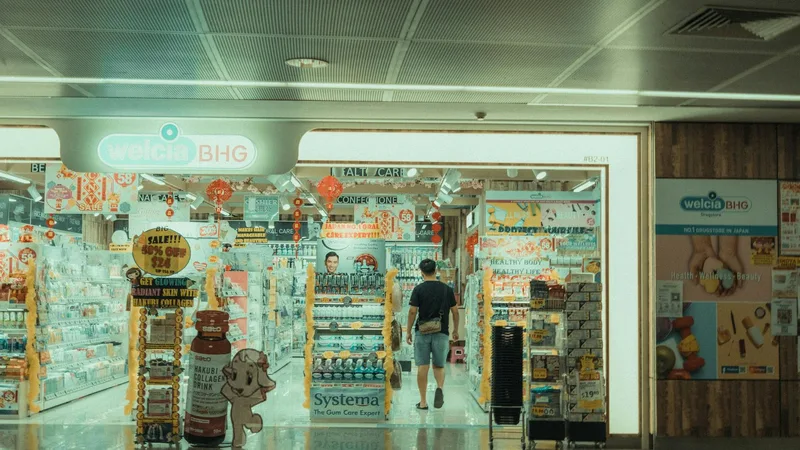
Dollar General actually predates most people's mental timeline for this industry. J.L. Turner and his son Cal Turner Sr. founded it in 1939 in Scottsville, Kentucky, originally as a general merchandise wholesaler. They converted to a retail model and rebranded as Dollar General in 1955, with the core promise that no item in the store would cost more than a dollar. That was a bold commitment. And it built fierce loyalty in rural and small-town communities that bigger retailers completely ignored.
Family Dollar came next, founded by Leon Levine in Charlotte, North Carolina in 1959. Levine's concept was slightly different: target working-class families in urban and suburban neighborhoods, keep overhead low, and stock the products those families actually needed week to week. He opened his first store with $6,000. By the time Family Dollar went public in 1970, it had 100 stores. Not bad for a decade's work.
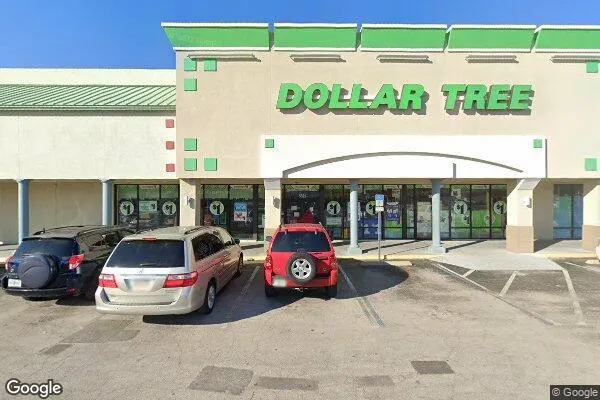
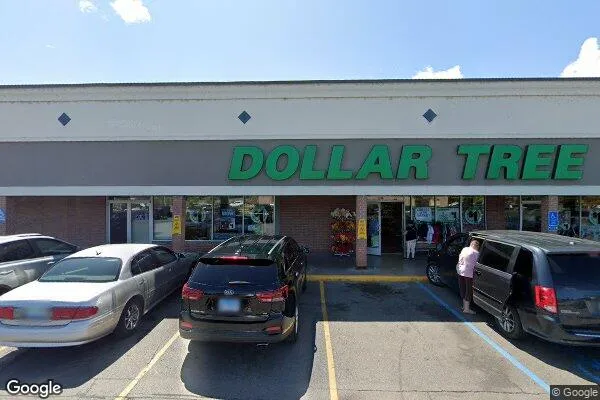
Dollar Tree is the youngest of the big three, founded in 1986 in Norfolk, Virginia under the name "Only $1.00." Everything cost exactly one dollar. No exceptions, no fine print. That simplicity was its superpower. Customers didn't have to think. They didn't have to budget per item. Everything was a dollar, period.
How did these chains actually keep prices so low? A few specific strategies. First, store closeouts: when a manufacturer overproduces or a retailer goes under, someone has to buy that surplus inventory at a steep discount. Dollar store chains built entire purchasing operations around acquiring this merchandise cheaply and moving it fast. Second, bulk purchasing agreements with manufacturers who needed guaranteed volume. Third, keeping store formats small and lean, which meant lower rent, fewer staff, and less overhead than big-box competitors.
And then there was the strip mall boom. From the 1970s through the 1990s, American suburbs filled up with strip malls anchored by grocery stores or pharmacies, with smaller retail spaces available cheap. Dollar stores fit those spaces perfectly. They didn't need fancy storefronts. They didn't need elaborate fixtures. They needed a front door, some shelving, and a cash register. Strip mall landlords were happy to fill empty units with stable, high-traffic tenants.
By 1999, Dollar General had over 2,600 stores. Family Dollar was pushing past 3,000. Dollar Tree was smaller but growing fast. In practice, the model had proven itself across every type of community, urban, suburban, and rural alike. Affordable stores were no longer an experiment. They were a proven, scalable business.
Dollar Stores in the Modern Era: Boom, Backlash, and Staying Power
The 2008 financial crisis did something interesting to retail. It pushed millions of middle-class Americans into budget-conscious shopping habits they'd never had before. People who used to buy everything at Target or Walmart started paying attention to price in a way they hadn't since their parents' generation. Dollar stores were waiting for them.
Between 2008 and 2012, Dollar General opened roughly 500 new stores per year. Dollar Tree's revenues grew by more than 40 percent over that same period. Family Dollar was expanding aggressively into urban markets. These weren't cheap stores anymore in the cultural sense, they were becoming mainstream options for a huge swath of American consumers who simply wanted to spend less money on everyday things.
But success brought complications. By the mid-2010s, critics were raising real concerns about dollar store saturation in low-income communities. Some studies suggested that clusters of dollar stores can crowd out full-service grocery stores, leaving residents with access to cleaning products and packaged snacks but limited fresh food. Several cities, including Tulsa and Birmingham, attempted to regulate or limit new dollar store openings in certain neighborhoods. Whether or not you agree with that approach, the fact that cities felt they needed to do it says something about how dominant these value stores had become.
Worth mentioning here: if you're looking for ways to stretch a grocery budget beyond what dollar stores carry, salvage grocery options in your area can be a surprisingly good complement, these stores sell surplus or near-date food at serious discounts and tend to carry more fresh and refrigerated product than most dollar stores.
Supply chains also became a major stress test. The $1.00 price point, which Dollar Tree had held sacred since 1986, finally broke in 2021. Inflation, shipping costs, and supply chain disruptions forced Dollar Tree to shift most of its inventory to $1.25. That sounds trivial. It was not. Typically, the company received enormous backlash from loyal customers who felt the brand's core promise had been violated. And honestly, they had a point. As a rule, the whole identity of the store was built on that number.
Dollar stores also started expanding their product mix in ways that would have been unrecognizable to their founders. Refrigerated sections with dairy and frozen foods. Name-brand items alongside generic alternatives. Seasonal merchandise. Health and beauty products with recognizable labels. For most shoppers, the goal was to become more of a neighborhood convenience store than a pure closeout retailer, and in many communities, that's exactly what they are now.
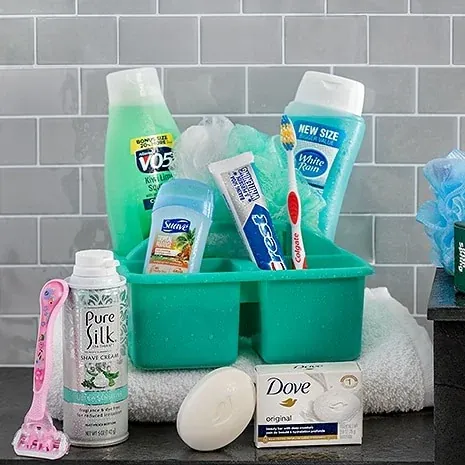
If you're shopping discount stores for household staples, check the cleaning supply and paper goods aisles first. These categories tend to offer the most consistent value compared to grocery stores, regardless of which chain you're visiting. Name-brand cleaning products at dollar stores are often 30–50% cheaper than at regular supermarkets.
E-commerce complicated things too. Amazon and other online retailers can beat dollar stores on price for many categories, especially with Prime shipping. But here's the thing most retail analysts underweight: dollar stores win on friction. You can walk in, grab what you need, pay, and leave in under five minutes. No delivery wait. No minimum order. No subscription. For a lot of people, especially in communities with limited transportation, that immediacy is worth a lot.
Dollar Stores by the Numbers: What the Directory Data Actually Shows
Our directory currently lists 3,748 dollar stores, discount stores, and bargain retail businesses across the country. Average customer rating sits at 4.0 stars. That's a pretty solid number for any retail category, and it suggests that most people who bother to review these stores are coming away satisfied. Not blown away, but satisfied. Which is about right for value retail.
Geographic distribution in the data is interesting. Springfield leads with 40 listings, followed by Phoenix and Columbus at 39 each, Wilmington at 34, and Jackson at 29. What does that tell you? Mainly that dollar stores don't cluster exclusively in big cities. Springfield, Wilmington, and Jackson are mid-size markets, which confirms what the industry has always known: these stores serve a broad demographic range, not just dense urban populations.
Phoenix makes sense at 39 listings given its population size and sprawling suburban geography. Columbus is a major metro with a diverse mix of neighborhoods, and the density there reflects real demand across income levels. Springfield appearing at the top is notable because it shows how smaller cities can have just as much concentration of discount retail as large metros. Anyone trying to figure out where to find dollar stores near me in smaller markets should not assume these places are only in big cities.
Now here's the business data table for the top-rated stores in our directory:
| Business Name | Location | Rating | Reviews |
|---|---|---|---|
| Dollar General | Terre Haute, IN | ⭐ 5.0 | 11 reviews |
| Dollar General | Brownsville, TX | ⭐ 5.0 | 10 reviews |
| Dollar General | Dunlow, WV | ⭐ 5.0 | 9 reviews |
| Dollar Tree | Polson, MT | ⭐ 5.0 | 6 reviews |
| Ukura's Big Dollar Store | McGregor, MN | ⭐ 5.0 | 4 reviews |
Look at those locations: Terre Haute, Brownsville, Dunlow, Polson, McGregor. None of these are major metros. Dunlow, West Virginia has a population of a few hundred people. Polson, Montana is a small lakeside town. And yet these stores are pulling perfect ratings. That's the dollar store story in miniature: consistent, dependable value in places that don't have a lot of other options. Ukura's Big Dollar Store in McGregor, Minnesota is the kind of independent local bargain store that you'd never find on a national retail map, but it's clearly doing something right.
Independent stores like Ukura's often outperform the big chains on customer experience, by the way. Smaller inventory, more personal service, staff who know the regulars. You don't get that at a corporate-run location with high turnover and a district manager breathing down everyone's neck.
Why Bargain Stores Are Not Going Anywhere
Inflation has been real and persistent. Grocery prices rose dramatically between 2021 and 2024, and even as some categories have stabilized, household budgets are stretched in ways they weren't a decade ago. Discount stores and value stores are direct beneficiaries of that pressure. Not because people like being on a tight budget, but because smart shopping has become a point of pride again in a way it hasn't been since the 1970s.
There is also a geographic access argument that does not get enough attention. In many rural and semi-rural areas, a Dollar General or Family Dollar is the closest thing to a general store within 20 miles. These communities don't have Targets or Walmarts nearby. They have a dollar store, a gas station, and maybe a diner. For residents who can't easily drive long distances, or who don't have reliable transportation, those affordable stores are genuinely essential infrastructure.
And look, the thrift culture has shifted too. Shopping at discount variety stores used to carry a social stigma in some circles, something you did quietly and didn't mention at dinner parties. That has changed significantly, especially among younger consumers who approach frugality as a lifestyle choice rather than a sign of financial struggle. Thrift stores, bargain stores, and discount stores are now part of a broader "value-conscious" identity that cuts across income levels.
If you're serious about maximizing your budget across different types of discount retail, it's also worth exploring salvage grocery stores as a category, these are separate from dollar stores but serve a similar customer mindset, and the savings on food can be substantial.
Small independent bargain stores are worth seeking out specifically. They don't get the press that Dollar General or Dollar Tree does, but they often carry more interesting merchandise, including real closeout deals on brand-name items rather than the steady generic stock you see at chain locations. Our directory lists hundreds of these independent operators across the country.
Don't write off dollar stores for specific product categories. Party supplies, gift wrap, greeting cards, cleaning supplies, and basic kitchen tools are consistently good value at most discount stores. Avoid produce and perishables unless you're buying same-day, quality varies a lot and the savings aren't always worth the risk.
Frequently Asked Questions
Are dollar stores actually cheaper than grocery stores and big-box retailers?
For specific categories, yes, often meaningfully so. Cleaning products, paper goods, party supplies, and seasonal items at dollar stores and bargain stores are typically 20-50% cheaper than the same items at Walmart or a grocery chain. For food, it depends heavily on the item and whether you're comparing unit price. Do not assume everything in a dollar store is a deal without checking the per-unit math.
How do dollar stores keep prices so low?
Several ways: buying store closeouts and surplus inventory at steep discounts, negotiating bulk pricing with manufacturers, keeping store formats small to reduce overhead costs, and in some cases selling smaller package sizes that look cheap but have a higher per-unit cost. Not every "cheap store" deal is what it appears to be, so read the labels.
Are independent dollar stores better than chains?
Often better on customer experience, sometimes better on merchandise variety, and usually more responsive to the community they serve. Chains have supply chain advantages and broader buying power. For pure reliability and consistency, chains win. For unexpected finds and personal service, independent bargain stores frequently come out ahead.
How do I find dollar stores near me in smaller towns or rural areas?
Our directory covers 3,748 businesses across the country, including small markets like McGregor, MN and Dunlow, WV. Use the search function and filter by city or zip code. Rural areas often have fewer options, but the ones that exist tend to be well-reviewed because they serve communities with limited alternatives.