Stocking Your Pantry on a Budget: A Dollar Store and Discount Grocery Strategy
3,548 discount and dollar store businesses are listed across five major cities in our directory, and they average a 4.0-star customer rating. That number is worth sitting with for a second, because 4.0 stars across thousands of locations is not what most people expect when they picture a dollar store. Grocery budgets in the U.S. have been under serious pressure since 2021, with food-at-home prices rising over 25% cumulatively by late 2024. Families who once shopped exclusively at traditional supermarkets have been quietly shifting their habits, splitting their carts between dollar stores, discount variety stores, and bargain grocery chains. And the data tells a different story than the stigma: these stores are not just for emergencies. They are a legitimate, repeatable strategy for stocking a full pantry at 20 to 40% less than conventional grocery spending.

This article walks through exactly how to do it. Not vague advice like "buy store brands" or "clip coupons," but a real split strategy: what to buy where, how to organize it, how to read pricing at discount stores, and how to find the best cheap stores and value stores near you using directory resources. There are also some honest notes on quality, expiration dates, and the kinds of products you should and should not expect to find at these places.
1. Understanding What's Actually Out There
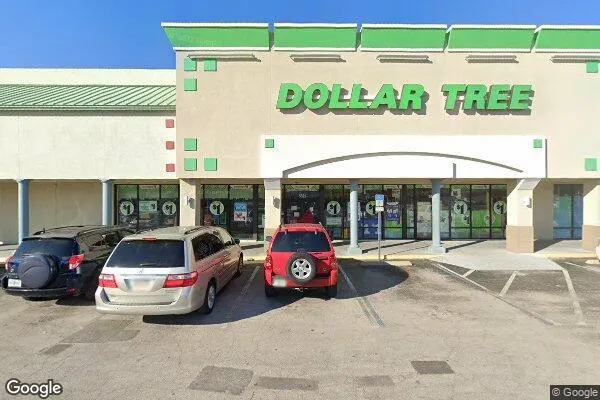
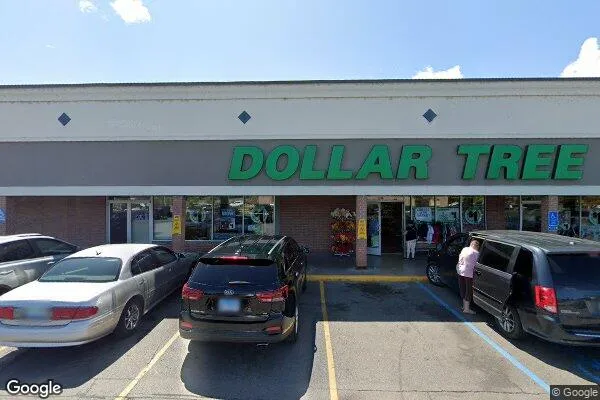
Most people mentally lump all discount retail into one category. But the types of stores operating in this space are actually pretty different from each other, and knowing the difference changes how you shop. Dollar stores (Dollar General, Dollar Tree, Family Dollar) carry a fixed or near-fixed price point on most items. Discount variety stores carry a broader range of goods, often at variable prices, with deep cuts on specific categories. Bargain stores and closeout retailers buy excess inventory, discontinued lines, or overstock from manufacturers and sell it at steep discounts. Value stores and thrift-style grocery outlets often carry name-brand food near its sell-by date at 30 to 70% off. Each one of these formats has a different sweet spot for what you should buy there.
Springfield leads our directory with 40 listings, followed closely by Columbus with 39, Wilmington with 34, Jackson with 29, and Charleston with 28. Those numbers reflect real density. In a city like Columbus with 39 listed discount and bargain stores, you likely have multiple options within a few miles of your home, which means you can actually shop strategically across formats rather than settling for whatever's closest. Smaller cities are represented too, which is part of why the total climbs to 3,548 nationally.
And this matters for planning. If you know there's a dollar store four blocks away and a closeout grocery two miles out, you can structure a single weekly shopping trip that hits both and covers most of your pantry needs in one pass.
2. What to Buy at Dollar Stores: The Pantry Staples That Actually Make Sense
Canned goods are the clearest win at dollar stores. Canned black beans, kidney beans, diced tomatoes, tomato paste, chicken broth, and condensed soups regularly hit $1.00 to $1.25 per can at these places versus $1.79 to $2.50 at a standard grocery store. Buy 20 cans on one trip and you've already banked $10 to $25 in savings without changing what you're eating at all. Dry goods follow the same pattern: pasta, rice, oatmeal, lentils, and dried beans at dollar stores are often 30 to 50% cheaper per unit than grocery store equivalents, even accounting for the sometimes-smaller package sizes (more on unit pricing in a moment).
Condiments and spices are another category that people overlook. A bottle of soy sauce, a jar of minced garlic, hot sauce, ketchup, mustard, or a small spice jar at a dollar store is basically the same product as the grocery store version. A lot of it is name-brand overstock or closeout. Honestly, checking the spice aisle at a discount variety store before ever paying $5 at a regular grocery store for a small jar of paprika seems obvious once you've done it once.
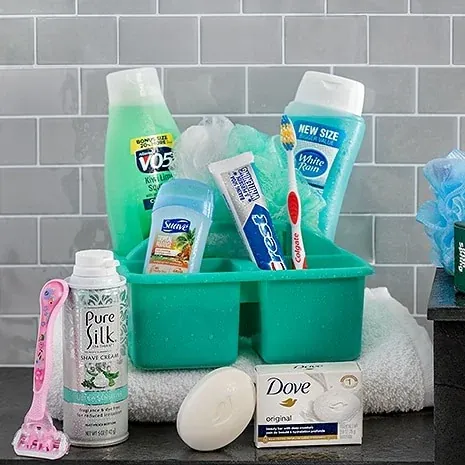
Non-food items deserve just as much attention. Aluminum foil, plastic wrap, zip-top storage bags, dish soap, laundry detergent pods, sponges, paper towels, and cleaning sprays at dollar stores can run 40 to 60% cheaper than supermarket prices. This matters because every dollar you don't spend on dish soap is a dollar available for food. Redirect $15 to $20 per month from household supplies to protein or produce and you've quietly rebalanced your whole budget without eating worse.
Many products at dollar stores and bargain stores are name-brand overstock, discontinued packaging runs, or store-brand equivalents made in the same facilities as full-price grocery products. They meet the same FDA and USDA standards. The stigma around quality at these places is largely outdated, check the label, check the date, and shop with the same habits you'd use anywhere.
One thing people get wrong: assuming everything at a dollar store is a dollar. That was more true a decade ago. Today, pricing at many of these stores goes up to $5 or $8 on certain items. Still often a deal, but you need to compare rather than assume. More on that in the next section.
3. Smart Shopping Habits for Discount and Bargain Stores
Unit pricing is the skill that separates someone who saves money at discount stores from someone who just thinks they're saving money. A 12-ounce can of beans at $1.00 is about 8.3 cents per ounce. A 15-ounce can at $1.25 is 8.3 cents per ounce too. Same deal. But a 28-ounce can at $1.75 is 6.3 cents per ounce, which is actually better. Smaller packages at low sticker prices can look like the best value and turn out not to be. Pull out your phone calculator and do the division. It takes 15 seconds and can shift your buying decision entirely.
Building a rotating pantry system is the second key habit. Buy multiples of any shelf-stable item you find at a genuine deep discount, put the newest items at the back of the shelf, and work through the older ones first. This is just basic food rotation, but it means you're always cooking from a stocked pantry rather than scrambling for last-minute grocery runs (which tend to be expensive because you're buying out of urgency, not strategy). If pasta is $0.89 at a value store this week, buy eight boxes. It keeps for two years.
Store apps and weekly circulars actually work at these places. Dollar General's app regularly offers $5 off $25 digital coupons that stack with in-store sales. Discount variety stores sometimes run clearance sections that rotate weekly. Walking the clearance aisle first is a real tactic, not just a tip. One visit to a clearance section at a local bargain store produced six cans of brand-name soup at $0.39 each. Six cans for $2.34. That's not a metaphor, that's just what happened.
Loyalty programs at discount grocery chains are also worth signing up for, even if you only shop there occasionally. They're free, they track your purchases, and they often surface coupons for things you actually buy rather than random products. Takes two minutes to sign up and pays back over time.
Label the date you bought each item when you stock up. Use a marker directly on the can or box. When you unload new stock, move old stock forward. Check expiration dates once every 60 days. Nothing complicated, just a system that prevents waste and keeps you cooking from savings rather than paying full price in a pinch.
4. Combining Dollar Stores and Discount Grocers: The Split Strategy
Dollar stores and value stores are not good at everything. Produce, fresh dairy, and proteins are almost never found there. What they're excellent at is shelf-stable pantry goods, cleaning products, and packaged snacks. Discount grocery stores, on the other hand, often carry near-date produce at deep discounts, discounted meats that are perfectly fine to cook that day or freeze, and dairy products close to their sell-by date at 40 to 60% off regular price. You need both. Relying on just one of these formats leaves real money on the table.
Here's a rough monthly budget split for a household of four with a $600 grocery budget. About $150 goes to dollar stores and discount variety stores for canned goods, dry staples, spices, snacks, and all household supplies. Another $200 goes to a discount grocery store for proteins (chicken thighs, ground beef, pork shoulder), dairy (milk, eggs, cheese), and produce. That leaves $250 for a regular grocery store run to fill gaps, buy specialty items, or stock up on anything you couldn't find elsewhere. Compare this to spending all $600 at a standard supermarket and you're likely looking at 25 to 35% total savings, which is $150 to $210 back in your pocket every month. Annually, that's $1,800 to $2,500. Not nothing.
Discount grocery chains and salvage grocery stores handle near-expiration and overstock inventory in a way that's actually worth understanding. Overstock items are products a distributor ordered too many of; they're full-quality, often still months from expiration, just discounted to move quickly. Near-date items have a shorter window but are perfectly safe to buy if you're planning to eat or freeze them within a few days. The key is to shop these sections with a specific meal plan in mind, not just to grab whatever looks cheap. Buy the discounted chicken breast if you're grilling this week. Don't buy it if it's going to sit in your fridge for a week without a plan.
Contrary to popular belief, buying near-date food is not risky if you know what you're doing. Sell-by dates are manufacturer suggestions for peak quality, not safety cutoffs. USDA guidelines are pretty clear on this. Frozen food, in particular, is safe well beyond printed dates as long as it's been stored properly.
5. Top-Rated Stores Worth Knowing About
Raw rating data from the directory gives a useful look at which individual stores are performing best. Five locations hit a perfect 5.0 stars: Dollar General in Terre Haute, IN (11 reviews), Dollar General in Brownsville, TX (10 reviews), Dollar General in Dunlow, WV (9 reviews), Dollar Tree in Polson, MT (6 reviews), and Dollar Tree in Manchester, NH (4 reviews). These are all smaller communities, which might be part of why the scores are so high. Smaller-town stores often have consistent staff, lower foot traffic, and a community feel that big urban locations can't match. The Dunlow, WV location in particular is probably serving a rural area where it's one of the only affordable stores for miles.
| Business | Location | Rating | Reviews |
|---|---|---|---|
| Dollar General | Terre Haute, IN | 5.0 ★ | 11 |
| Dollar General | Brownsville, TX | 5.0 ★ | 10 |
| Dollar General | Dunlow, WV | 5.0 ★ | 9 |
| Dollar Tree | Polson, MT | 5.0 ★ | 6 |
| Dollar Tree | Manchester, NH | 5.0 ★ | 4 |
What the ratings suggest more broadly is that dollar stores, when they're run well, genuinely satisfy customers. 4.0 stars averaged across 3,548 locations is a real endorsement. That's not a participation trophy number. It reflects consistent positive experiences across a huge variety of store formats, cities, and neighborhoods.
6. How to Find Dollar Stores and Discount Stores Near You
If you're searching for "where to find dollar stores near me," a business directory is frankly more useful than Google Maps for this specific task because it filters by store type rather than just proximity. You can search specifically for bargain stores, closeout retailers, or discount variety stores in your city and get a list organized by rating and location rather than wading through sponsored results and irrelevant listings. Our directory has 3,548 entries across the country, and the concentration in cities like Springfield, Columbus, and Wilmington means that in most mid-size metros, you have real options within a short drive.
For discount grocery specifically, checking out salvage grocery options in your area is worth doing separately from your dollar store search, because those stores operate differently and carry different inventory. They're not always listed in the same directory categories as thrift stores or cheap stores, but they're a genuinely different and complementary resource.
Plan your search before you need to shop, not during a stressed Wednesday evening when you've run out of things for dinner. Build a list of three or four nearby affordable stores across categories (one dollar store, one discount variety store, one discount grocer), and map out which ones make sense for which types of purchases. Then stick to it. In practice, the split strategy only works if you actually know where you're going before you leave the house.
Search by city name plus store type. Use terms like "bargain stores," "value stores," or "discount variety stores" rather than just "dollar stores" to surface the full range of options. Sort results by rating to prioritize stores that other shoppers in your area have already vetted. Check addresses against your regular commute route, stores you pass anyway are easiest to build into a routine.
7. Building the Habit: Making This Strategy Stick Long-Term
One shopping trip to a discount store does not save you money. One year of consistent split shopping does. Typically, the difference between someone who saves $150 a month on groceries and someone who doesn't isn't knowledge, it's habit. Most people know they could save money at dollar stores. They just don't build the routine.
Start small. Pick one category: canned goods, cleaning supplies, or spices. Buy that category exclusively at a dollar store or bargain store for 30 days. Calculate what you actually spent versus what you would have spent at your regular grocery store. Write it down. Seeing a real number, even something modest like $18 saved in a month on canned goods alone, makes the habit feel worth maintaining.
After 30 days, add a second category. After 60 days, add the discount grocery trip for proteins and produce. By 90 days, you've built a full split strategy without overhauling your whole life at once, and you've got real personal data on your actual savings rather than someone else's estimate. That's more motivating than any tip in any article, including this one.
As a rule, the stores are out there. 3,548 of them with an average 4.0-star rating, sitting in cities and towns across the country, mostly in strip malls with easy parking and relatively short lines. Walking in knowing what to buy and what to skip is the whole game.
More Ways to Save
Find Dollar Stores and Discount Stores Near You
Browse our directory of 3,548+ dollar stores, bargain stores, discount variety stores, and value stores listed nationwide. Filter by city, rating, and store type to find the best affordable stores near you.
Search the DirectoryAre dollar store products lower quality than grocery store products?
Not necessarily. Many products sold at dollar stores and discount variety stores are name-brand overstock, discontinued packaging runs, or store-brand equivalents produced in the same manufacturing facilities as full-price products. They meet the same FDA and USDA standards. Check labels and expiration dates just as you would anywhere else, and you'll find the quality difference is often minimal or nonexistent.
What should I NOT buy at a dollar store?
Fresh produce, dairy, and raw proteins are rarely available at dollar stores, and when they are, the quality and selection tend to be limited. Discount grocery stores handle those categories better. Also be cautious with electronics, batteries, and certain health products at dollar stores, where quality can be genuinely inconsistent. Stick to food, cleaning supplies, and paper goods for the best results.
How do I know if I'm actually saving money on unit price at a bargain store?
Divide the price by the number of ounces, units, or servings on the package. A cheap sticker price on a small package can actually cost more per unit than a slightly higher price on a larger package. Use your phone calculator every time until it becomes second nature. This one habit makes the difference between real savings and the feeling of savings.
Is it safe to buy near-expiration food at discount grocery stores?
Yes, with common sense. Sell-by dates are quality guidelines, not hard safety cutoffs. Near-date items are fully safe to buy if you plan to use them within a few days or freeze them immediately. USDA guidelines confirm that frozen food remains safe well beyond printed dates when stored correctly. Shop with a meal plan in mind so near-date purchases get used rather than forgotten.
How do I find discount stores and dollar stores near me?
A business directory filtered by store type is one of the most reliable methods. Search for "dollar stores," "bargain stores," "value stores," or "discount variety stores" in your city to surface the full range of options. Our directory lists 3,548 locations nationwide with ratings and city-level filtering