Dollar Store Grocery Finds: When to Buy Food at Dollar Stores vs Salvage Grocery Stores
You're Trying to Save Money, But You're Not Sure Who to Trust
You're standing in the canned goods aisle at a dollar store, holding a can of diced tomatoes you've never heard of, wondering if it's actually a deal or if you're about to regret dinner. Maybe the price is right, but the label looks a little off, the brand name is vague, and the expiration date is smudged near the seam. This is the exact moment most people either commit to budget shopping or walk away confused. Grocery bills have climbed steadily over the last few years, and more shoppers are actively looking at discount stores, bargain stores, and value stores as a real part of their food budget, not just a place to grab cheap paper plates. But there are two very different types of discount food shopping experiences out there, and mixing them up leads to bad decisions, wasted money, and occasionally some truly disappointing meals.
This article is here to sort that out. We're looking at dollar stores (the big chains and smaller discount variety stores you probably already know) versus salvage grocery stores, a different animal entirely. By the end, you'll know exactly which types of food to buy at each, which ones to skip, and how to build a shopping routine that actually works for your household budget.
Dollar Stores vs. Salvage Grocery Stores: They Are Not the Same Thing
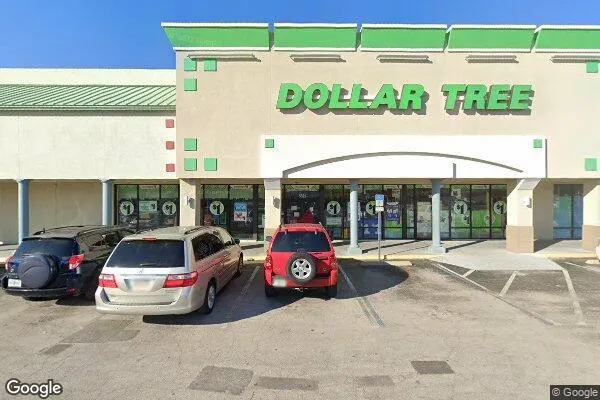
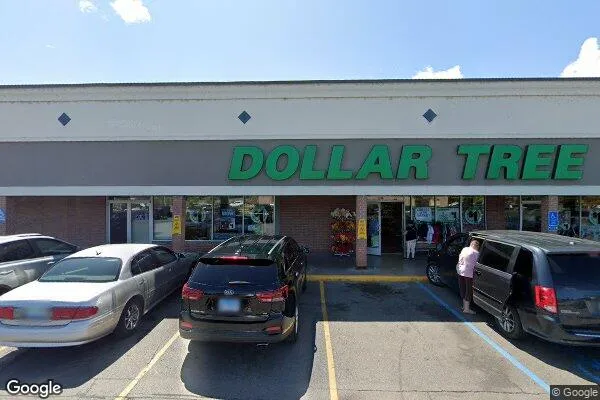
Dollar stores, which most people know through chains like Dollar Tree, Dollar General, and Family Dollar, are fixed-price or low-price retail chains. They carry a rotating mix of name-brand and private-label grocery items, often sourced as overstock, closeout inventory, or items produced specifically for the discount channel. Prices are consistent, stores are everywhere (Springfield leads our directory with 40 listings, Columbus follows with 39, and Wilmington has 34), and the shopping experience is predictable. You can walk in on a Tuesday and again the following Tuesday and expect to find roughly the same things. That consistency is genuinely valuable when you're trying to plan meals on a budget.
Salvage grocery stores are a completely different setup. These are typically independent, locally operated stores that buy surplus food, discontinued products, damaged-packaging goods, and near-expiration items directly from manufacturers, distributors, and sometimes even other grocery chains that are clearing inventory. Prices can be dramatically lower, sometimes 50 to 80 percent below retail. But the inventory changes constantly, sometimes weekly, and you never quite know what you'll find. No two salvage stores look or feel the same, and that's kind of the point.
Dollar stores offer consistent, reliable grocery staples at low prices. Salvage grocery stores offer unpredictable but often massive deals on name-brand products. Smart shoppers use both, but for different purposes and on different schedules.
Walking into a salvage grocery store for the first time is a little disorienting, honestly. Boxes might be stacked to the ceiling with no particular organization, pricing labels look handwritten or printed on basic stickers, and you might find a pallet of name-brand pasta sauce next to a bin of dented soup cans. It's not Whole Foods. But if you find 40 cans of a brand you already use and trust for 30 cents each, that's real money saved. If you want to explore what's available near you, the Salvage Grocery Stores directory is a solid starting point for finding locations in your area.

What to Buy (and Avoid) at Dollar Stores and Discount Stores
Dollar stores shine brightest in specific food categories. Canned goods are almost always a strong buy. Beans, corn, diced tomatoes, tuna, and chicken broth regularly show up at these cheap stores for prices that genuinely beat the grocery store, even accounting for unit price differences. Dry pasta and rice are reliably good buys too. Spices and seasonings are where a lot of people don't realize they're overpaying at traditional supermarkets. A small jar of garlic powder or Italian seasoning that costs $3.50 at a regular grocery store might be $1.25 at a dollar store, and the product quality is often comparable.
Snack foods, cookies, crackers, and candy are frequently found at discount variety stores as overstock or seasonal closeouts. Condiments like ketchup, mustard, soy sauce, and salad dressing are solid picks. Baking staples like sugar, flour, baking soda, and vanilla extract often appear at prices well below what you'd pay elsewhere. Boxed mac and cheese, ramen, instant oatmeal, and similar shelf-stable convenience foods round out the list of reliable buys.
Now for the honest part.
Fresh produce, dairy, and meat at dollar stores deserve real skepticism. Not because these stores are doing anything wrong, but because quality control on perishables is genuinely harder to maintain in a discount retail model, and turnover at a dollar store is not the same as at a dedicated grocery store. If you see bagged salad or a carton of milk at a bargain store, check the date carefully and inspect the packaging before you put it in your cart. Some locations do a fine job. Others don't.
Also worth noting: unfamiliar private-label brands are not automatically bad. Many are produced by the same manufacturers that make name-brand products. But if a label has very little information, no clear country of origin, and the brand name sounds like it was invented last week, that's worth pausing over. Check for a clear "best by" or "use by" date and make sure the packaging is fully intact.
Buy with confidence: Canned goods, dry pasta, rice, spices, condiments, snack foods, baking staples, instant noodles, boxed meals, shelf-stable beverages, and cleaning supplies (bonus: frees up grocery budget for food).
Approach with caution: Fresh produce, dairy, meat, fish, items without clear expiration dates, and any packaging that looks like it's been opened or re-sealed.
One practical tip that's worth repeating: always check unit prices. A 12-ounce jar of peanut butter at a dollar store might look cheap, but if a 28-ounce jar at a warehouse store works out to less per ounce, you're not actually saving. Do the math. Most people don't, and it costs them.
Salvage Grocery Stores: Big Savings, Real Risks, and How to Shop Smart
Salvage grocery stores are genuinely exciting if you know what you're doing. The deals are real. A pallet of name-brand pasta sauce that a manufacturer overproduced, a truckload of cereal boxes with a slightly damaged corner, a case of canned soup that a grocery chain discontinued from its planogram, these all end up at salvage stores at a fraction of their original cost. Shoppers who know their regular grocery prices can walk out of a salvage store having saved $60 or $80 on a single trip.
Large families, meal preppers, and small business owners who buy in volume get the most out of these stores. If you can buy 24 cans of black beans at 40 cents each and you have a pantry to store them, that's a win. Home canners and bulk freezer meal planners tend to love salvage stores for exactly this reason.
But the risks are real too, and ignoring them is how people end up sick or just wasting money on things they can't actually use. Here's the most important thing to understand about dates on food products. "Best by" and "use by" are not the same thing. A "best by" date is a quality indicator. After that date, the product may not taste quite as fresh or may have slightly changed texture, but it's usually still safe to eat for weeks or even months beyond it, depending on the product. A "use by" date on something like deli meat or fresh juice is a genuine safety date and should not be ignored. Shelf-stable canned goods with a "best by" date that's a few months past are almost always fine. An unsealed package of meat that's past its "use by" date is not.
Damaged packaging is another thing to evaluate carefully. A dented box of crackers is almost certainly fine. A deeply dented, bulging, or leaking can of anything is not, and you should put it back. Botulism from damaged canned goods is rare but real, and no deal is worth that risk.
Inventory at salvage grocery stores changes constantly, sometimes week to week. That means you can't plan your entire weekly meal plan around what you hope to find there. The smart approach is to treat salvage stores as a supplement to your regular shopping, not a replacement. Visit once or twice a month, stock up on nonperishables when you find a great deal, and fill in the gaps at your regular grocery store or at a dollar store for the consistent everyday items.
Before buying any food item at a salvage grocery store, quickly run through these checks: Is the packaging fully sealed? Is the can free of deep dents, bulging, or rust? Is the "best by" or "use by" date visible and reasonable? Is the item something shelf-stable where date flexibility is normal (canned goods, dry pasta, spices)? If you can answer yes to these, you're probably fine.
When to Choose Each One: A Practical Side-by-Side Look
This is where it all comes together. Dollar stores and discount stores work best as a regular, reliable part of your weekly routine. You can plan around them. You know roughly what they'll have. Springfield, Columbus, Wilmington, and Jackson are among the cities with the most listings in our directory, which tells you something about how widely available these stores are. If you've ever searched for "where to find dollar stores near me," you've probably found more options than you expected.
Salvage grocery stores work best as a periodic bulk-buying opportunity. You go when you can, you stock up on what makes sense, and you don't count on them for next Tuesday's dinner.
| Food Category | Dollar/Discount Store | Salvage Grocery Store |
|---|---|---|
| Canned goods | ✅ Great buy | ✅ Great if packaging is intact |
| Dry pasta/rice | ✅ Reliable | ✅ Stock up when available |
| Name-brand cereals | ⚠️ Sometimes available | ✅ Often huge discounts |
| Spices/seasonings | ✅ Strong buy | ⚠️ Inconsistent availability |
| Fresh produce | ⚠️ Check carefully | ❌ Usually not available |
| Meat/dairy | ⚠️ Location-dependent | ❌ High risk, skip it |
| Condiments/sauces | ✅ Reliable | ✅ Great deals on name brands |
| Snacks/crackers | ✅ Good buy | ✅ Often deeply discounted |
Lots of smart budget shoppers end up doing both. Dollar stores and other value stores handle the weekly staples. Salvage stores handle the periodic bulk run when time and storage allow. It's not either/or. It's about knowing which store serves which purpose.
And honestly, the people who get the most out of both types of stores tend to be the ones who know their prices at regular grocery stores well enough to recognize a real deal when they see one. You can't know if 40 cents per can is good if you've never checked what your regular store charges. Pay attention for a few weeks. It becomes second nature pretty quickly.
Top-Rated Dollar and Discount Stores in Our Directory
Our directory includes 4,009 businesses across the dollar store and discount store category, with an average customer rating of 4.0 stars. That's a genuinely solid average for a category this large. Below are some of the highest-rated individual businesses currently listed.
| Business Type | Location | Rating | Reviews |
|---|---|---|---|
| Retail Florist | Kansas, KS | ⭐ 5.0 | 333 reviews |
| Food Delivery | New York, IA | ⭐ 5.0 | 180 reviews |
| Novelties | Pennsylvania Furnace, PA | ⭐ 5.0 | 133 reviews |
| Retail Florist | Illinois City, IL | ⭐ 5.0 | 53 reviews |
| Novelties | Indiana, PA | ⭐ 5.0 | 21 reviews |
Five-star ratings backed by over 300 reviews are not easy to earn in retail. That the Kansas, KS florist has 333 reviews and a perfect score says something about what happens when a local business gets the customer experience right, even in a discount-adjacent shopping category.